My dad’s memories of stripping tobacco on the family farm in Salt Lick, Ky.

In this post, my dad, Joe Karrick, reflects on his memories of stripping tobacco. As he notes, tobacco was once grown on almost every Kentucky farm. Indeed, data from the USDA shows that in the 1950s, Kentucky had around 136,000 working tobacco farms, but by 2022 that number had dropped to 984. That decrease came about due to the drop in demand because of increased health concerns over tobacco usage, and also because of a major reform signed into law in 2004, commonly referred to as simply “the buyout.” While tobacco growing may not be the thing it once was, it’s still important to know our history and the work that shaped and supported families for generations.

From my dad, Joe Karrick:

When I was growing up, about all farms in Kentucky grew some tobacco – we were no exception. We grew about 2 – 2 1/2 acres of tobacco every year. In the fall of the year, after the tobacco had cured in the big tobacco barn, it was time to “strip” it. This involved pulling the tobacco leaves off the stalks and tying the bundles of leaves into hands.

Tobacco had to be “in case” in order to work it. “In case” meant that the leaves had enough moisture in them to be pliable and workable. Rainy days and foggy mornings would bring tobacco in case. The sticks holding about 6 stalks of tobacco would be dropped down out of the barn rails. The stalks of tobacco would be pulled off the sticks and stacked tightly in a pile or bulk, and covered to retain moisture.

Burley tobacco hanging in a barn near Lexington, Kentucky. (Image courtesy of the Library of Congress)

There was a “stripping room” attached to the barn on the north side. The entire north side of the stripping room was windows to give light to work by. Norther exposure was preferred because the light was not glaring and more stable throughout the day. A waist high table ran the entire length of the room, about 20 to 24 feet long. A small stove at one end heated the room.

Tobacco was brought into the stripping room a large arm load at a time and placed on the left end of the table. I remember my mom helping strip tobacco. She would strip the bottom leaves off the stalk, place the stalk on the table to the right, and my Dad would then pull the middle leaves off.

A Bowling Green family stripping tobacco. (Image courtesy of the Library of Congress)

Tobacco had to be sorted into about 5 grades as it was stripped. My Mom would pull off the bottom damaged leaves called “trash” and pile them on the floor by her side. Then she would pull off the next grade of leaves, the “flyings” and accumulate them in her hand. Flyings were bright colored, usually tan-yellow with tattered edges. Dad pulled the “lug” leaves. Lugs grew in the middle of the stalk and were large, smooth, solid, tan/brown colored leaves, usually the most valuable. Above the lugs there would usually be two to three “bright” leaves. These were darker than the lugs and showed more red colors. Dad would pull them and make a pile on the floor by his side. He then passed the stalks down to me, and I would pull off the remaining leaves, the “Red.” Red leaves were shorter and darker colored than the Brights and Lugs. Empty stalks were piled on the right end of the table.

We accumulated the leaves in our hands until we couldn’t hold anymore. Then taking a leaf and folding it along the stem, we used it to tie the “hand” of tobacco to hold it together. The tie was made at the stem end of the leaves with all the stems bound tightly together. Thus a hand of tobacco was the quantity of leaves that you could hold in your hand.

The hands of tobacco were then placed on a tobacco stick – a stick would hold 12-14 hands. When the stick was full it would be “pressed.” The stick of stripped tobacco would be put in a press and squeezed flat and made easier to handle.

An old tobacco press. (Image courtesy of the University of Kentucky’s College of Agriculture Collection)

Work would continue all day; carry armloads of tobacco in, strip the leaves off, tie the leaves into hands, carry out the empty stalks, press the finished hands, place the finished pressed hands in a tight pile or bulk and cover.

We usually had a coffee pot on the stove and something for lunch, maybe beans, corn bread or some other basic grub.

We worked together toward a common goal. I learned early where money came from, and I learned the value of hard, honest work. I saw my mom and dad stick together through thick and thing – a good life lesson!

Tobacco placed in the typical baskets and loaded in a truck. (Photo courtesy of the Library of Congress)

Sources: https://www.lpm.org/news/2024-10-22/crop-cashed-out-less-than-1k-ky-farms-still-grow-tobacco-20-years-after-major-reform and https://guides.loc.gov/tobacco-industry.

Thanks for reading!

Hog Killin’ Weather

A clipping from a 1908 copy of the Owingsville Outlook, courtesy of the Library of Congress.

A few years ago, as I was looking at digitized copies of the Owingsville Outlook, I happened upon this interesting tidbit in which the writer states, “Hog-killing, Thanksgiving and Christmas to look forward to before the blue days of winter come on.” It struck me that “hog-killing” seemed a celebratory event, one on par with Christmas and Thanksgiving, something to be enjoyed before the gloom of winter set in. I mentioned it to my dad, Joe Karrick, and he started telling me his childhood memories of that event. Of course, this clipping is a lot older than my father, but I would guess the ins and outs of hog killing stayed the same.

“Hog-killing weather” is the phrase my dad remembered. One couldn’t butcher hogs until the weather was cold and was going to stay cold. It needed to be timed well to ensure a good final product. In the clipping below, you’ll note that some in Knob Lick were going to have ruined meat due to the weather warming back up. I would imagine this would have brought terrible hardship for some families. It also makes me wonder how good some would have been at predicting the weather without all of our modern technology. I’m betting there were a few old timers that could “feel it in their bones.”

Clipping from the December 1, 1898 edition of the Owingsville Outlook.

While it may seem gruesome to our modern minds and sensibilities, hog-killing was often a familial event, with uncles, aunts, and cousins coming to lend a hand and visit. Neighbors and friends, too, would join in on the work if needed, and often it was needed because this work had to be finished in a day. While it seems men did the worst and most physical of the work, women labored as well, cutting up meat, grinding sausage, and often seeing to the huge kettles. Children weren’t shielded from the blood and gore either, as you can tell from my dad’s recollection of the event. My mom worries that what he writes is “too gruesome,” but Dad, in true Dad fashion, says it’s just how it was – no sense in trying to pretty it up.

If you have your own memories of “hog-killing time” please leave a comment, or if you’d like to read more from “Papaw Joe” be sure and let us know.

Hog Killin’ Time by Joe Karrick

I grew up on a family farm just south of Salt Lick in Bath County, Ky. My Dad. Hugh Karrick, raised cattle and hogs, and grew corn, hay, tobacco, and sometimes a patch of watermelons or strawberries. Dad raised hogs to sell but usually butchered three to four for our own use. Almost all country folks back then raised hogs for meat and lard.

Hogs were butchered in the fall when temperatures dropped, thus the old saying, “hog killing weather.” If my memory is correct, Dad would choose three to four in the 250 – 300 pound class. I will try to describe the process.

The hog was shot with a .22 caliber rifle aiming at the brain. Death was instantaneous. Dad always had someone else to do the shooting. I think he dreaded it since he had cared for the animals all year. As soon as the hog was shot, someone would slit its throat, cutting through major veins and arteries, and then the hog would bleed out.

The next step was removing the hair from the carcass. This was done by placing the carcass in a “scalding pan,” a large metal vessel big enough to hold the hog. A wood fire was built under the pan, and the water heated to about 150 degrees, scalding temperature. After being submerged for a bit the hair would “slip” or loosen itself. Then came the job of of scraping all the hair off the hog. This took a while. After the hair was removed, the hog was hung head down from a barn rail. The belly was opened up and all the entrails were removed, the heart and liver were saved.

My grandmother had a very large screened in back porch. The hog carcasses were laid out on the porch floor. The heads were removed and saved to make souse meat. There sat a working tub full of hog heads! The carcass was then cut up into the parts that most folks recognize: hams, ribs, shoulder, sow belly or bacon, jowl, and backbone. The feet were saved for pickled pigs feet. The cuts were trimmed of excess fat and then put on benches in the “smoke house” and salted down. It took several weeks for the salt cure to be completed.

All of the trimmings and leaf fats (around internal organs) were saved and made into lard and soap. Two big black kettles were set up in the back yard and heated up with wood fire. Lard was produced in one kettle by heating the fat until it liquified, then, I think, strained and poured into five gallon cans where it cooled down and became white lard. The second kettle was for soapmaking. Again, fat was placed in the kettle, and such soap production requires lye to convert the fat to soap. After heating and liquifying, the soap resolution was strained and poured into flat pans, and upon cooling was cut into cakes of soap.

Meanwhile in the kitchen, my grandmother and her helpers were busy making sausage. A large meat grinder was clamped to the old kitchen table. Meat suitable for sausage was run through the grinder, mixed with some spices, and made into patties. The patties were cooked and then placed in large mason jars for storage.

The process provided food for the family for the coming year.

A lot of folks today think meat comes from Kroger. Meat comes from animals that have been cared for by a farmer. A good farmer’s goal is that his animals have only one bad day in their lives, and that is the day they are slaughtered.

Thanks, Dad, for sharing your memories of “hog killin’ time.” May we all appreciate where our food comes from and honor those farmers who strive to give the animals in their care a good life.

If you want to read more about hog killin’ time, I recommend the following sites: https://afroculinaria.com/2013/01/24/hog-killing-time-comments-and-commentary-on-a-southern-plantation-tradition/

https://blindpigandtheacorn.com/hog-killin-day/

If you need help cooking a ham, a few years ago, the sister of my friend Julie Grannis Carroll was featured in an NPR article about how her family prepared them. Linda and Julie grew up in Fleming County and “putting the ham to sleep” was a family culinary tradition. Here’s a link to that article. https://www.npr.org/2022/12/04/1139534855/kentucky-ham-country-ham-recipes-food

Thanks for reading!

"Cap" Dawson’s Blacksmith Shop

In this entry, Mr. Burl writes about the blacksmith shops that were in Owingsville and specifically mentions “Cap” Dawson.  In his book, The History of Bath County, John Adair Richards also mentions Cap Dawson.

From the journals:

Have you ever watched a blacksmith prepare a shoe for shoeing a horse?  All of our Bath County towns had these shops.  A typical blacksmith had an anvil, a forge and bellow, hammers, cutters, barrel of water, and nails.  The “Smithy’s” shop often was crude with a dirt floor.

Before the automobile took its toll on the blacksmith shops in the late twenties, there were three shops in Owingsville.  Do you recall the name of “Cap” Dawson, Wes Harris, and Jim Reed?  “Cap” was the smith for a shop located where Western Auto* now operates.  Later,  “Cap” operated a shop where the E.L. and A.T. Byron building now stands on the corner of Henry and Oberlein Streets (not “Oberline” as is currently on the sign).

Young boys often frequented these shops as spectators enjoying the works of the blacksmiths.  Often there was excitement when an unruly horse acted up. Blacksmiths would on occasion accept other jobs such as repairing hinges, repairing metal parts of farm wagons, etc. 

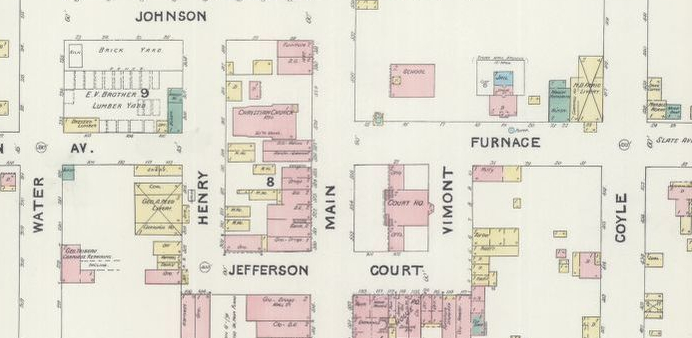
*Western Auto was located where Family Discount Drugs now stands. If you look on the map below, you’ll see a blacksmith shop in that location.

default
Old Sanborn Insurance map of Owingsville, 1891. This map shows a blacksmith shop on the corner of  Oberlin and Water, plus another one by the old jail on Slate Avenue (“Furnace” on the map).  Mr. Burl’s memory of the blacksmith shop would come much later as he wasn’t born until 1916.  Sanborn Fire Insurance Map from Owingsville, Bath County, Kentucky. Sanborn Map Company, Jul, 1891. Map. Retrieved from the Library of Congress, .

sn86069620 1899-04-06 1 4 image 681x648 from 3507x3872 to 5523x5792
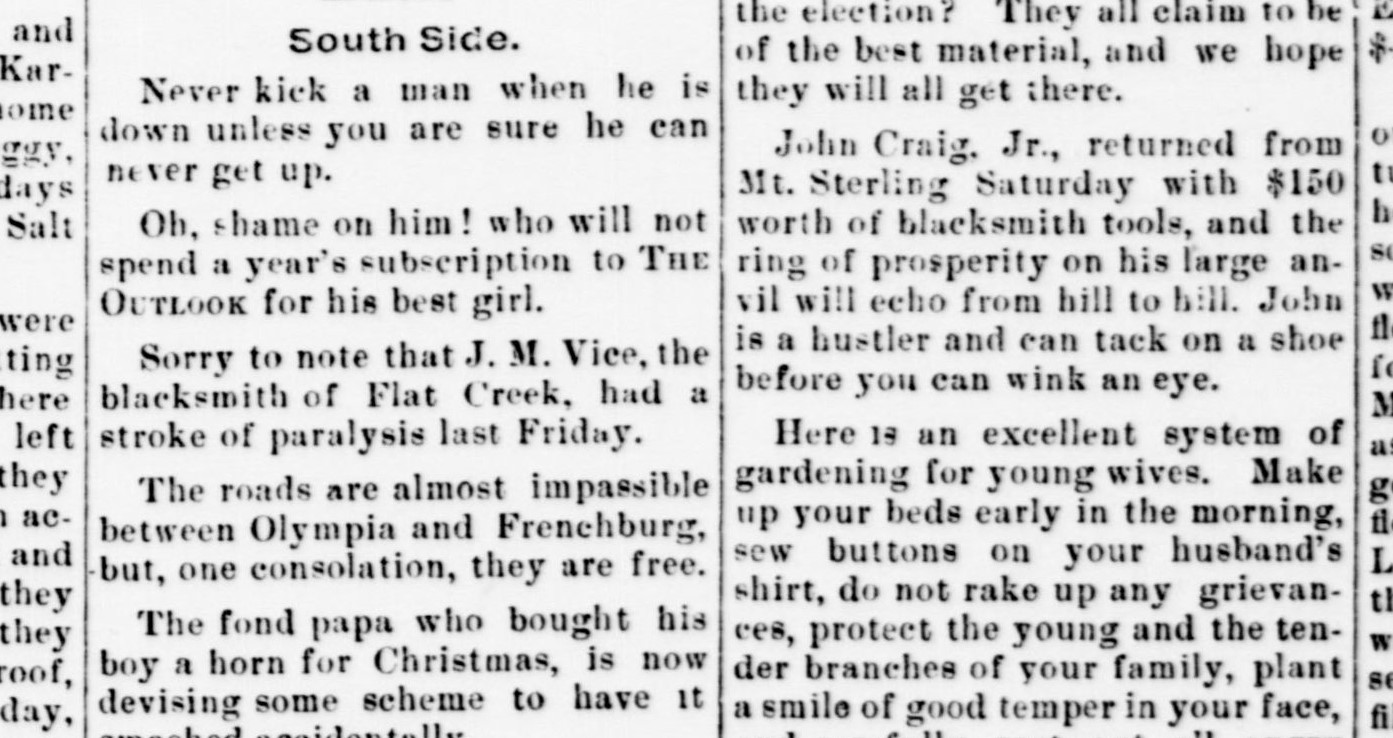
News of blacksmiths from an old copy of the Owingsville Outlook dated 1899. Vice on the left column, while John Craig is mentioned on the right. Owingsville outlook. (Owingsville, Ky.), 06 April 1899. Chronicling America: Historic American Newspapers. Lib. of Congress.

sn86069620 1906-05-31 1 1 image 681x648 from 1347x5842 to 3528x7919
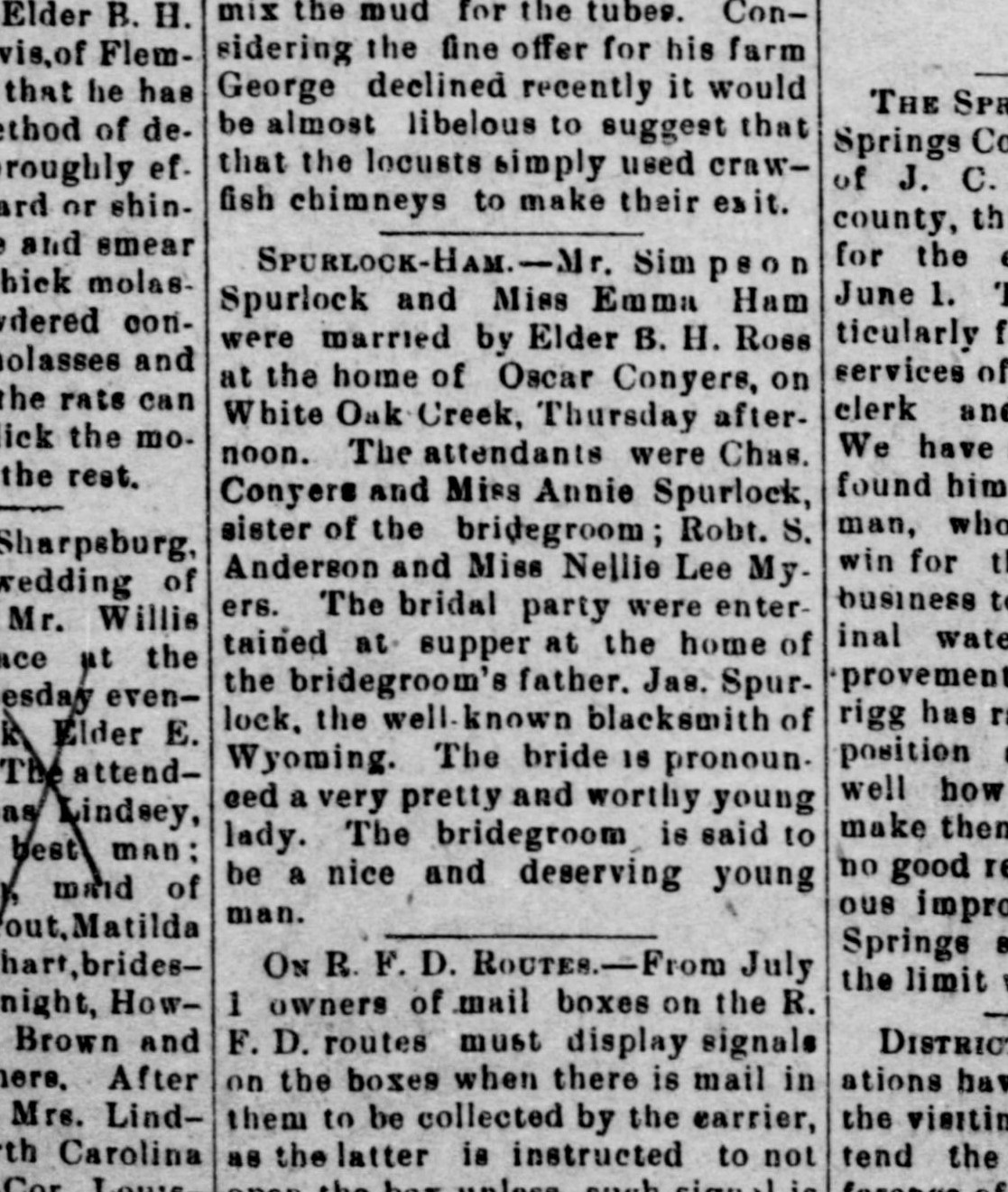
News clipping from 1906 that mentions the Wyoming blacksmith. Owingsville outlook. [volume] (Owingsville, Ky.), 31 May 1906. Chronicling America: Historic American Newspapers. Lib. of Congress.

sn86069620 1903-03-05 1 1 image 681x648 from 401x4395 to 2549x6440
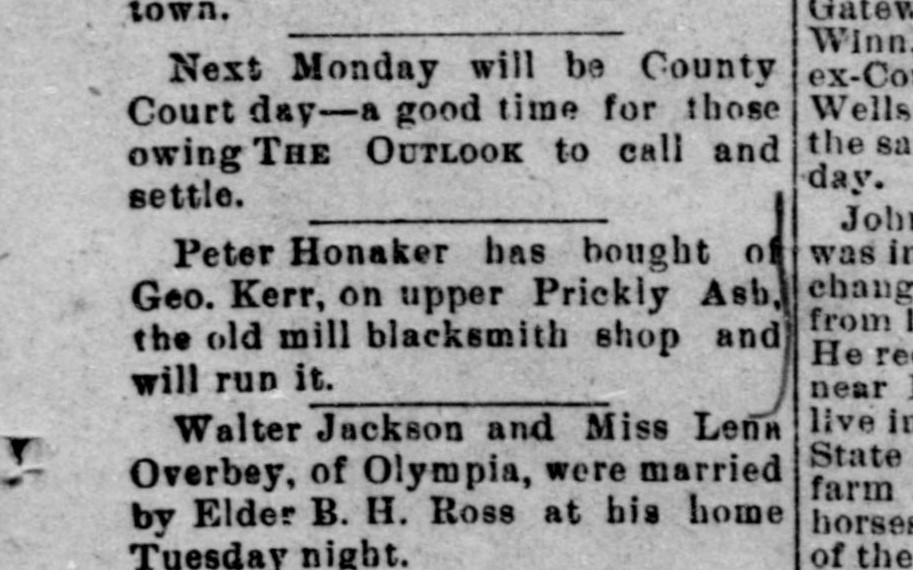
Owingsville outlook. [volume] (Owingsville, Ky.), 05 March 1903. Chronicling America: Historic American Newspapers. Lib. of Congress.

sn86069620 1898-10-06 1 1 image 681x648 from 359x4129 to 2363x6038
1898 newspaper clipping mentioning the blacksmith at Preston. Owingsville outlook. [volume] (Owingsville, Ky.), 06 Oct. 1898. Chronicling America: Historic American Newspapers. Lib. of Congress.

Will Hayden’s Roofs


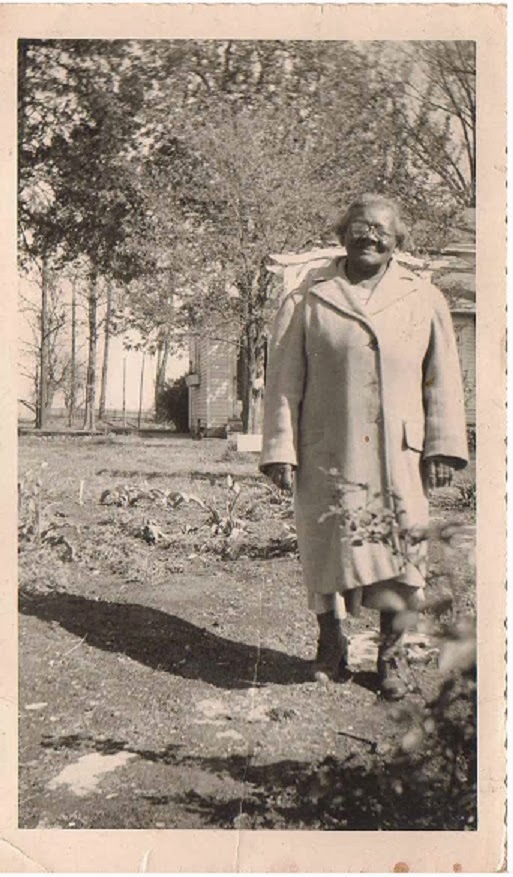
Annie Hayden, wife of Will Hayden, circa 1953.  “Miss Annie” worked for the Jacob Kincaid family and can be seen in numerous family pictures. This picture was taken in the back yard of what is now Marcelle Doggett’s home. Some say there is the image of a ghost in the lower right hand side of the picture, right under Miss Annie’s left hand.  
 
If you make it a point to observe some of the tin roofs in Bath County, you will note that there is a type with ridges, where sheets of tin have been crimped together.  These tin roofs were installed by a master tinner.  This tinner was a resident of Bath County, and his name was Will Hayden.  He had his shop in the building that he owned on the corner of Oberlin and Water Streets.  The red building still stands at that address.*
Many houses and businesses are still sheltered by the tin roofs installed by Mr. Hayden.
*The red building that Mr. Burl refers to is no longer standing, as it was destroyed by fire several years ago.  However,  Mr. Hayden’s roofs are still visible all over town.   Don and I took a drive on a Sunday not too long ago, and he showed me several examples of this skilled tinner’s work.  You can differentiate between newer metal roofs and those installed by Mr. Hayden by looking for staggered, horizontal overlaps.  Some of the houses in town are completely covered by his metal roofs, while others just have the original porch overhang.   The overhang on Mr. Delbert Anderson’s home is an example of Mr. Hayden’s fine craftsmanship.  Once you know what to look for, the roofs become easy to spot.

Ice Delivery in Owingsville


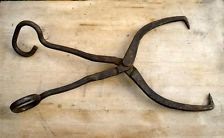
Antique Ice Tongs

From the journals:

       “How many refrigerators do you suppose there were in Bath County in 1920?  1930? 1940?  If there were so few, then what did folks do without refrigeration for preserving food and cooling drinks?
       At regular times every day during the warmer months, the local ice man or men made their rounds.   Mr. John Coyle and Mr. Francis Hunt (of Mt. Sterling) were two men who delivered ice.
        Ice that was sold in Bath County prior to the coming of refrigeration came from a plant in Mt. Sterling.  The ice was frozen in three hundred pound cakes.  The ice was readily cut by chipping with an ice pick.  Usually the chunks were cut in to three one-hundred pound cakes.  Most patrons did not buy ice by the hundred pounds, so the hundred pound cakes were cut to fifty pounds and even as small as ten pounds for some customers.
      Every ice man had at least two pair of hook type carriers for lifting and carrying ice.  Their trucks were what in those days were referred to as one and a one-half ton vehicles.
      The ice man usually supplied his regular patrons with a card which was about one foot square.  This card would have four different numbers that indicated pounds.  The pounds listed were 100, 50, 25, and 10.  The patron would place his card on a nail on his front porch with the side of the card up indicating the number of pounds he desired that day.”
        I visited with Tommy Hodge today, and he told me that a Mr. John Thompson also delivered ice in Bath County.  – Ginger