What’s in the Woods? – My dad’s memories of growing up without deer, turkey, bear, and elk in Salt Lick, KY.

In this post, my dad, Joe Karrick, writes about wildlife in Bath County. He told me a while back that he didn’t see his first deer until he was a teenager, and that really amazed me. I guess I found that so hard to believe because I take them for granted. I have seen them outside my kitchen window right here in Owingsville. I just never considered that there was a time when they weren’t around, because in earlier days, wasn’t Kentucky known by native and pioneer alike as a land abounding in wildlife? What happened to the deer?

The answer, of course, is that they were over-hunted and their habitat harmed, which consequently led to them being pretty much wiped out. The history behind that and their reintroduction is quite interesting, and I’ve included a link to the Kentucky Department of Fish and Wildlife’s page on the history of deer management in Kentucky, where a timeline is shown starting with Thomas Walker’s observation in 1750 that deer were “plentiful.”

Yes, deer were plentiful but by just 1775, the Virginia Legislature was attempting to address the diminishing deer population, and by 1810, James Audubon wrote the once plentiful deer had “ceased to exist.” In 1916, deer hunting was banned in Kentucky.

Deer were overhunted but it’s important to not vilify outdoorsmen. Good hunters care about healthy animal populations as much as anyone else, and there have always been those voices of reason. For example, Daniel Boone, that mighty frontiersman himself, is considered to be the first “game warden” in our state after he was appointed to oversee Boonesborough’s “game committee.” I don’t hunt and I eat very little meat, but I appreciate hunters who act as stewards of our beautiful land and its creatures. They are some of the very best advocates for game laws and regulations because they know what can happen otherwise.

From my dad, Joe Karrick:

As a boy growing up in Bath County, Kentucky, during the 1950s, I spend a lot of time in the fields and woods. I pretty well knew what animals were in the woods. There were no deer until the late 1950s, no turkeys, no coyotes, no eagles, no elk, and no bears.

Deer were hunted to near extinction by the start of the 20th century. The Kentucky Department of Fish and Wildlife did a lot of restocking of deer across the state. I started seeing deer in the woods after about 1957. Today’s deer population in Kentucky is about one million.

Turkeys were restocked starting in 1978. I often see turkeys now like the mother and her chicks in the summer on my farm.

I saw no coyotes in the 1950s. Most folks think that coyotes came into Kentucky in 1977-78 when the Ohio and Mississippi rivers froze over and they coyotes walked across them into Kentucky from neighboring states. Coyotes are everywhere in Kentucky now and can be a pest. I grow sweet corn for market – coyotes eat sweet corn!

I never did see a bear in the 1950s, but I did see a track in the mud in the Clear Creek area. Bears have expanded into Kentucky from the east. Kentucky habitats have improved. Forests that regenerated after the heavy wholesale logging in the early 20th century are now mature and are providing heavy crops of nuts, acorns, etc., which the bears love. Bears are now sighted every year in Bath County.

I did not see any eagles in the 1950s. In the last few years, I have seen eagles, even had one fly over my house!

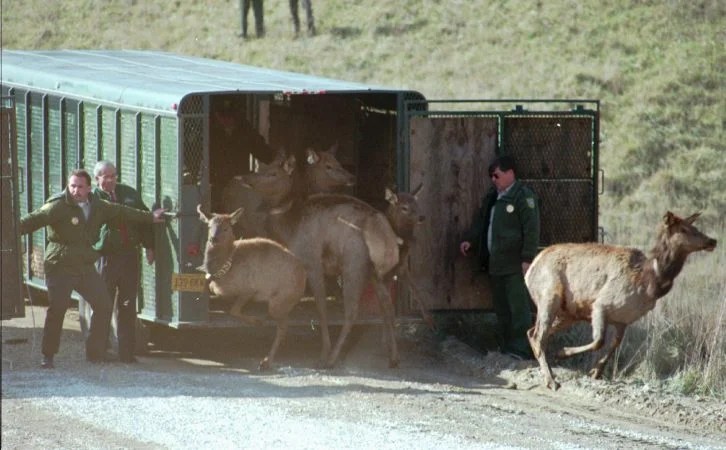
Eastern elk were hunted to extinction in Kentucky by 1860 or so. The Kentucky Department of Fish and Wildlife have introduced western elk into strip mined lands in eastern Kentucky, and the population now is about 18,000.

I have never seen a mountain lion here in Bath County. There have been confirmed sightings in Tennessee and Missouri, and sightings are increasing.

A cougar was killed in Bourbon County in 2014 by law enforcement. It is believed it was a pet that had escaped. My sister, Janet, lived the Clear Creek area and while driving in the National Forest one afternoon late, she swore she saw a large tan, long tailed cat with two cubs. Sounds like a cougar to me!

Dad writes about cougars, and Don’s father, Burl Kincaid, Jr., wrote about them, too, but he called them “catamounts.” His grandfather, Jacob Kincaid, told the story of the “Catamount Hunt of Stepstone” and you can read about that here: https://journalsofwilliamburlkincaid.blog/2014/01/09/the-catamount-hunt-of-stepstone/

Kentucky Department of Fish and Wildlife’s history of deer management: https://fw.ky.gov/Hunt/Pages/History-of-KY-Deer-Management.aspx#:~:text=So%20the%20Kentucky%20Division%20of,Crittenden%2C%20Livingston%20and%20Ballard%20counties.
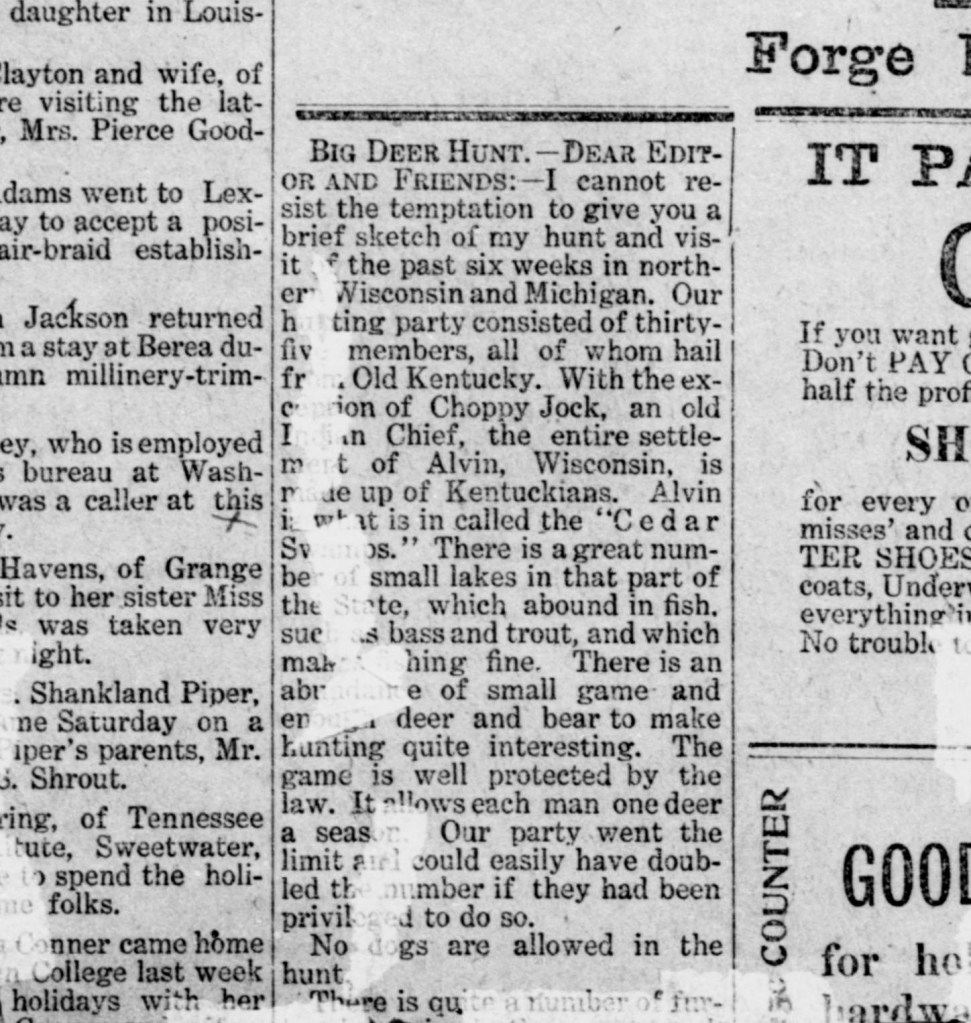
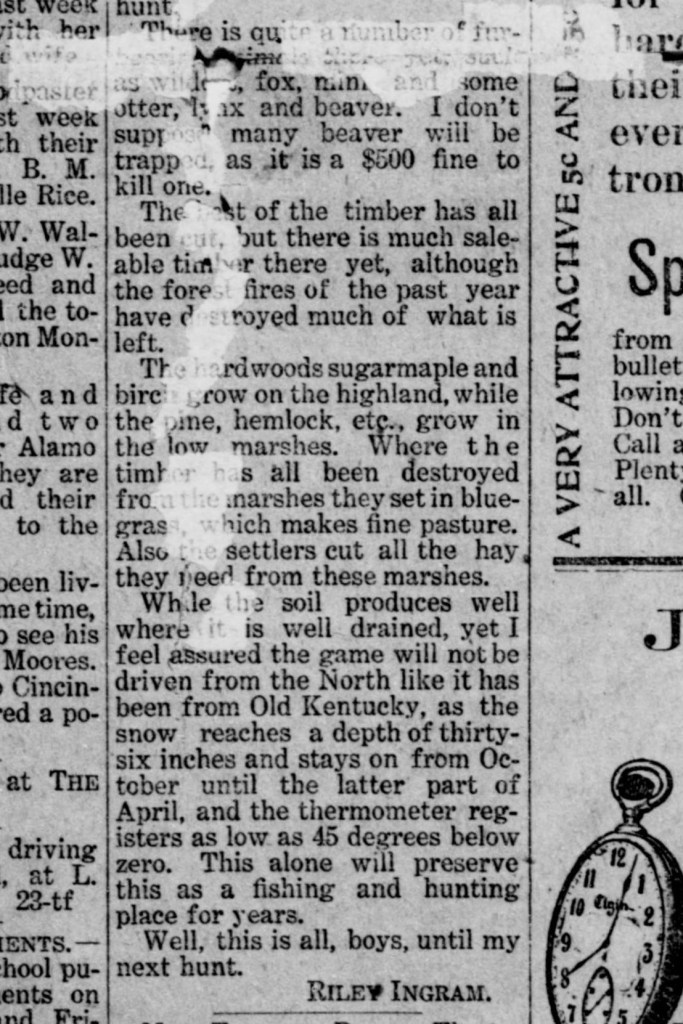
Riley Ingram’s letter to the editor of the Owingsville Outlook (December 22, 1910) describing his hunting trip north. In the following image he mentions how game has been driven from “Old Kentucky.”
Five elk are let released at an abandoned strip mine near Hazard, KY, in 1997. (Image courtesy of WHYY/PBS).

My dad’s memories of stripping tobacco on the family farm in Salt Lick, Ky.

In this post, my dad, Joe Karrick, reflects on his memories of stripping tobacco. As he notes, tobacco was once grown on almost every Kentucky farm. Indeed, data from the USDA shows that in the 1950s, Kentucky had around 136,000 working tobacco farms, but by 2022 that number had dropped to 984. That decrease came about due to the drop in demand because of increased health concerns over tobacco usage, and also because of a major reform signed into law in 2004, commonly referred to as simply “the buyout.” While tobacco growing may not be the thing it once was, it’s still important to know our history and the work that shaped and supported families for generations.

From my dad, Joe Karrick:

When I was growing up, about all farms in Kentucky grew some tobacco – we were no exception. We grew about 2 – 2 1/2 acres of tobacco every year. In the fall of the year, after the tobacco had cured in the big tobacco barn, it was time to “strip” it. This involved pulling the tobacco leaves off the stalks and tying the bundles of leaves into hands.

Tobacco had to be “in case” in order to work it. “In case” meant that the leaves had enough moisture in them to be pliable and workable. Rainy days and foggy mornings would bring tobacco in case. The sticks holding about 6 stalks of tobacco would be dropped down out of the barn rails. The stalks of tobacco would be pulled off the sticks and stacked tightly in a pile or bulk, and covered to retain moisture.

Burley tobacco hanging in a barn near Lexington, Kentucky. (Image courtesy of the Library of Congress)

There was a “stripping room” attached to the barn on the north side. The entire north side of the stripping room was windows to give light to work by. Norther exposure was preferred because the light was not glaring and more stable throughout the day. A waist high table ran the entire length of the room, about 20 to 24 feet long. A small stove at one end heated the room.

Tobacco was brought into the stripping room a large arm load at a time and placed on the left end of the table. I remember my mom helping strip tobacco. She would strip the bottom leaves off the stalk, place the stalk on the table to the right, and my Dad would then pull the middle leaves off.

A Bowling Green family stripping tobacco. (Image courtesy of the Library of Congress)

Tobacco had to be sorted into about 5 grades as it was stripped. My Mom would pull off the bottom damaged leaves called “trash” and pile them on the floor by her side. Then she would pull off the next grade of leaves, the “flyings” and accumulate them in her hand. Flyings were bright colored, usually tan-yellow with tattered edges. Dad pulled the “lug” leaves. Lugs grew in the middle of the stalk and were large, smooth, solid, tan/brown colored leaves, usually the most valuable. Above the lugs there would usually be two to three “bright” leaves. These were darker than the lugs and showed more red colors. Dad would pull them and make a pile on the floor by his side. He then passed the stalks down to me, and I would pull off the remaining leaves, the “Red.” Red leaves were shorter and darker colored than the Brights and Lugs. Empty stalks were piled on the right end of the table.

We accumulated the leaves in our hands until we couldn’t hold anymore. Then taking a leaf and folding it along the stem, we used it to tie the “hand” of tobacco to hold it together. The tie was made at the stem end of the leaves with all the stems bound tightly together. Thus a hand of tobacco was the quantity of leaves that you could hold in your hand.

The hands of tobacco were then placed on a tobacco stick – a stick would hold 12-14 hands. When the stick was full it would be “pressed.” The stick of stripped tobacco would be put in a press and squeezed flat and made easier to handle.

An old tobacco press. (Image courtesy of the University of Kentucky’s College of Agriculture Collection)

Work would continue all day; carry armloads of tobacco in, strip the leaves off, tie the leaves into hands, carry out the empty stalks, press the finished hands, place the finished pressed hands in a tight pile or bulk and cover.

We usually had a coffee pot on the stove and something for lunch, maybe beans, corn bread or some other basic grub.

We worked together toward a common goal. I learned early where money came from, and I learned the value of hard, honest work. I saw my mom and dad stick together through thick and thing – a good life lesson!

Tobacco placed in the typical baskets and loaded in a truck. (Photo courtesy of the Library of Congress)

Sources: https://www.lpm.org/news/2024-10-22/crop-cashed-out-less-than-1k-ky-farms-still-grow-tobacco-20-years-after-major-reform and https://guides.loc.gov/tobacco-industry.

Thanks for reading!

My grandmother’s gingerbread recipe.

My paternal grandparents were Hugh and Bertha Karrick of Salt Lick, Kentucky, and while thumbing through an old Homemaker’s cookbook, I found my grandmother’s recipe for gingerbread and decided I should try to make it with my own granddaughter, Elliott. She is four years old and loves to mix stuff up in the kitchen, recipe or not! It turned out great and we topped it with homemade whipped topping. Yum.

As I stated in previous post, as I move forward with this blog, I hope to share old local recipes like the gingerbread recipe of my Mamaw’s. I have quite a few cookbooks from the Homemakers, The Women’s Club, local churches, and so forth. These need to be saved for various reasons. First, these old cookbooks give us a glance of the domestic work that women traditionally did, and it’s work that needs to be appreciated, as it has often, at least in my opinion, been undervalued.

Second, old local cookbooks connect us with not only our own ancestors, but also the ancestors of our community, and they offer a glimpse into how information was collectively passed on. The recipes and household tips may seem trivial, but they’re not. I’ve participated in the compilation of these kinds of cookbooks, and it’s been my experience that the recipes are eagerly shared and received. Everybody wants a recipe that works, and in the days before the Internet provided easy access to that, women shared through church cookbooks and hand written notes. Of course, one could get a recipe out of a book or magazine, but not ones “reviewed” by the community by word of mouth after church potlucks and funeral dinners.

Third, these recipes often are from a time before processed foods. If we want to eat healthier, it might not hurt to start with these older recipes that use basic ingredients. You might see the occasional “cream of something soup” called for, but not often, especially in the oldest ones. The recipes, with few exceptions, are simple and call for basic pantry staples.

I hope you enjoy the ones I share, and if you have one you’d like to contribute, please let me know.

The recipe. I followed it exactly as written, although I wasn’t sure what a “moderate oven” temperature would be. I finally went with 350 and baked for about a half an hour, testing frequently to see if a toothpick inserted would come out clean.
Mrs. Hugh Karrick's Gingerbread (Salt Lick Homemakers)

2 cups flour
1/4 tsp. soda
1/2 tsp. salt
1/3 cup butter or shortening
2/3 cup molasses
2 tsp. baking powder 2 tsp. ginger
1 tsp. cinnamon
1/2 cup sugar
1 egg, well beaten
3/4 cup sour milk [buttermilk]

Sift flour once, measure, add baking powder, soda, spices, and salt, then sift together three times. Cream butter thoroughly, add sugar gradually and beat together until light and fluffy. Add egg and molasses, then flour alternatively with the buttermilk, a small amount at a time. Beat after each addition until smooth. Bake in a moderate over [I baked at 350 for about 30 - 35 minutes or until a toothpick came out clean].
The finished product was cake-like and tasty. Elliott likes to go shirtless but insisted on an apron for cooking! I’m going to try to make one for her that fits.
We also made homemade whipped cream, which is super easy to make. 1 cup of heavy whipping cream, 2 tablespoons of sugar, and 1/2 teaspoon of vanilla. Beat until soft peaks form. We overbeat ours a little but we didn’t care.

I took the cookbook to my dad, Joe Karrick, because of the advertising in the back featuring Salt Lick businesses. I wanted to know more about some of them and thought it would also be helpful in dating the cookbook, which Dad decided was probably published in the 1950s.

The Greyhound Restaurant (a Greyhound bus stop) became Greene’s, a place by the creek most of us can recall. Horseman and Powell became Powell’s. Salt Lick Milling had corn meal and flour and was located on the creek bank further into town. Tom Perry operated the establishment.
Jarrett Manufacturing Co. became Reeve’s Lumber. The Gem Theater was located across from the Powell funeral home (or that’s what my dad best remembers). Earl Wills ran E.B. Wills Grocery, and Henry Craig ran the other listed at the top.

Thanks for reading!

Hog Killin’ Weather

A clipping from a 1908 copy of the Owingsville Outlook, courtesy of the Library of Congress.

A few years ago, as I was looking at digitized copies of the Owingsville Outlook, I happened upon this interesting tidbit in which the writer states, “Hog-killing, Thanksgiving and Christmas to look forward to before the blue days of winter come on.” It struck me that “hog-killing” seemed a celebratory event, one on par with Christmas and Thanksgiving, something to be enjoyed before the gloom of winter set in. I mentioned it to my dad, Joe Karrick, and he started telling me his childhood memories of that event. Of course, this clipping is a lot older than my father, but I would guess the ins and outs of hog killing stayed the same.

“Hog-killing weather” is the phrase my dad remembered. One couldn’t butcher hogs until the weather was cold and was going to stay cold. It needed to be timed well to ensure a good final product. In the clipping below, you’ll note that some in Knob Lick were going to have ruined meat due to the weather warming back up. I would imagine this would have brought terrible hardship for some families. It also makes me wonder how good some would have been at predicting the weather without all of our modern technology. I’m betting there were a few old timers that could “feel it in their bones.”

Clipping from the December 1, 1898 edition of the Owingsville Outlook.

While it may seem gruesome to our modern minds and sensibilities, hog-killing was often a familial event, with uncles, aunts, and cousins coming to lend a hand and visit. Neighbors and friends, too, would join in on the work if needed, and often it was needed because this work had to be finished in a day. While it seems men did the worst and most physical of the work, women labored as well, cutting up meat, grinding sausage, and often seeing to the huge kettles. Children weren’t shielded from the blood and gore either, as you can tell from my dad’s recollection of the event. My mom worries that what he writes is “too gruesome,” but Dad, in true Dad fashion, says it’s just how it was – no sense in trying to pretty it up.

If you have your own memories of “hog-killing time” please leave a comment, or if you’d like to read more from “Papaw Joe” be sure and let us know.

Hog Killin’ Time by Joe Karrick

I grew up on a family farm just south of Salt Lick in Bath County, Ky. My Dad. Hugh Karrick, raised cattle and hogs, and grew corn, hay, tobacco, and sometimes a patch of watermelons or strawberries. Dad raised hogs to sell but usually butchered three to four for our own use. Almost all country folks back then raised hogs for meat and lard.

Hogs were butchered in the fall when temperatures dropped, thus the old saying, “hog killing weather.” If my memory is correct, Dad would choose three to four in the 250 – 300 pound class. I will try to describe the process.

The hog was shot with a .22 caliber rifle aiming at the brain. Death was instantaneous. Dad always had someone else to do the shooting. I think he dreaded it since he had cared for the animals all year. As soon as the hog was shot, someone would slit its throat, cutting through major veins and arteries, and then the hog would bleed out.

The next step was removing the hair from the carcass. This was done by placing the carcass in a “scalding pan,” a large metal vessel big enough to hold the hog. A wood fire was built under the pan, and the water heated to about 150 degrees, scalding temperature. After being submerged for a bit the hair would “slip” or loosen itself. Then came the job of of scraping all the hair off the hog. This took a while. After the hair was removed, the hog was hung head down from a barn rail. The belly was opened up and all the entrails were removed, the heart and liver were saved.

My grandmother had a very large screened in back porch. The hog carcasses were laid out on the porch floor. The heads were removed and saved to make souse meat. There sat a working tub full of hog heads! The carcass was then cut up into the parts that most folks recognize: hams, ribs, shoulder, sow belly or bacon, jowl, and backbone. The feet were saved for pickled pigs feet. The cuts were trimmed of excess fat and then put on benches in the “smoke house” and salted down. It took several weeks for the salt cure to be completed.

All of the trimmings and leaf fats (around internal organs) were saved and made into lard and soap. Two big black kettles were set up in the back yard and heated up with wood fire. Lard was produced in one kettle by heating the fat until it liquified, then, I think, strained and poured into five gallon cans where it cooled down and became white lard. The second kettle was for soapmaking. Again, fat was placed in the kettle, and such soap production requires lye to convert the fat to soap. After heating and liquifying, the soap resolution was strained and poured into flat pans, and upon cooling was cut into cakes of soap.

Meanwhile in the kitchen, my grandmother and her helpers were busy making sausage. A large meat grinder was clamped to the old kitchen table. Meat suitable for sausage was run through the grinder, mixed with some spices, and made into patties. The patties were cooked and then placed in large mason jars for storage.

The process provided food for the family for the coming year.

A lot of folks today think meat comes from Kroger. Meat comes from animals that have been cared for by a farmer. A good farmer’s goal is that his animals have only one bad day in their lives, and that is the day they are slaughtered.

Thanks, Dad, for sharing your memories of “hog killin’ time.” May we all appreciate where our food comes from and honor those farmers who strive to give the animals in their care a good life.

If you want to read more about hog killin’ time, I recommend the following sites: https://afroculinaria.com/2013/01/24/hog-killing-time-comments-and-commentary-on-a-southern-plantation-tradition/

https://blindpigandtheacorn.com/hog-killin-day/

If you need help cooking a ham, a few years ago, the sister of my friend Julie Grannis Carroll was featured in an NPR article about how her family prepared them. Linda and Julie grew up in Fleming County and “putting the ham to sleep” was a family culinary tradition. Here’s a link to that article. https://www.npr.org/2022/12/04/1139534855/kentucky-ham-country-ham-recipes-food

Thanks for reading!

High School and the National Guard (William Owen Karrick Story: Part 3)

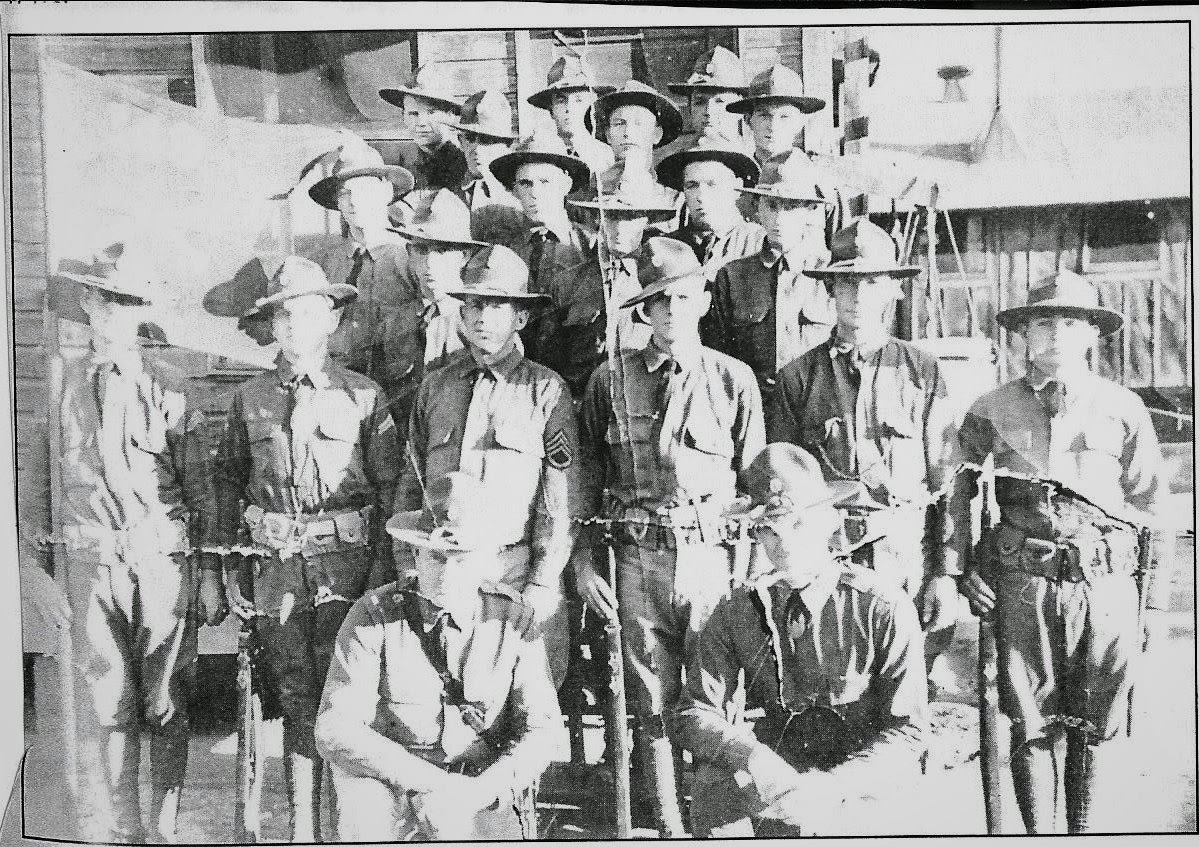
Salt Lick National Guard, 1927.
Those identified are Captain Corbett Gullett, Corbet Copher, William Karrick,
Jim Fawns, Herndon Dickerson, Hugh Karrick, Clifford Wells,
Roger Karrick, Van Green, Billy Frizzell and Robert Clark. 


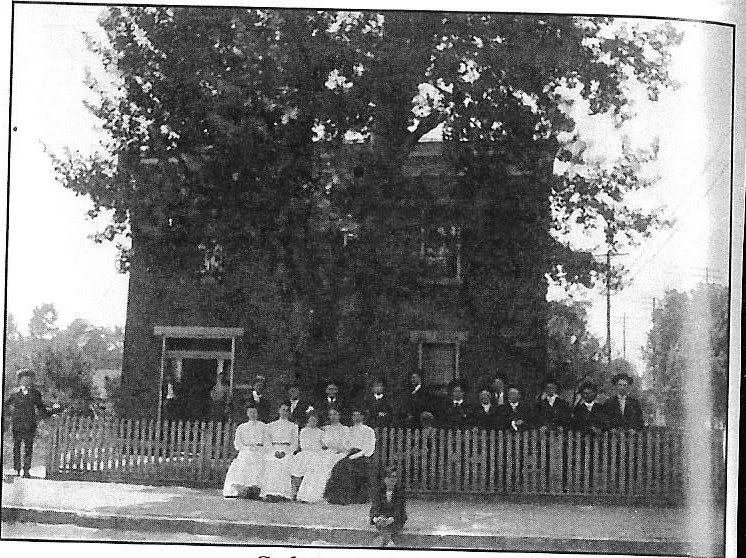
Salt Lick School, date unknown
 
This week, we continue with our series of excerpts from my great-uncle’s memoirs – hope you’re enjoying them!
From The William Owen Karrick Story:
In the first year of high school our class had nine girls and two boys.  They were Phoebe Seese, Olive Fanning, Rosie Freed, Marjorie Shouse (Marjorie married my brother Travis), Ethel Fawns, Opal Reeves, Sudie Maupin, Sudie Davis, Demory Parsons and me.  Our principal was O.J. Harris.  This professor took us to Lexington and Frankfort on a trip.  We visited Sistrunk, a fruit and vegetable distributor, and the federal prison in Frankfort.  This was a good lesson for those who might go wrong and break the laws.
During my second year in high school, a National Guard was established in Salt Lick, Kentucky.  The commander was Captain Corbett Gullett.  I was only fifteen years old at the time but through the permission of my parents, I joined the Guard.  The rifle company was going to Camp Knox for two weeks in the summertime.  Before the summer the guard had a rifle range where I spent several afternoons shooting at targets with 30/30 rifles.  When camp time came along, I received a preventative typhoid fever shot which caused me to have the fever.  I spent several weeks in bed and missed the Camp Knox trip.  In later years, I made the summer trips.  I was in the Guard for almost three years until it disbanded.  I was rated Corporal.
In the second year of high school, our principal was Mr. Wirick.  During this year, my friend Demory Parsons dropped out of school leaving me the only boy in a class of ten. I wanted to quit school too, so I took all my books home and told my father and mother that I had quit.  “Yeah,” Dad said, “You’ve quit.”
“Yes, “says I, “I’ve quit.
“Yes,” says Dad.  “You’ve quit until in the morning then you will return to school if I have to take a switch to you all the way.  Your mother and I have worked hard to see that all of you children finish high school.”
So back to school I went and am I glad that Dad made me return.  However, I was in the Guard at this time, and I skipped an afternoon class several times, going to the rifle range.  I got an F in that class, lost a credit, and had to go an extra semester in school to make up the work.  I didn’t get to graduate with my regular class of 1929.  I graduated in 1930.  The principal was Mr. Welch.
I entered Morehead State Teacher’s College in the fall and went through the first and second semesters and summer school.  I ended up with thirty-eight college hours and a teacher’s certificate good for two years which I used in teaching in a rural one room school at White Sulpher, Kentucky.  I tried very hard to do justice to the children as all eight grades were in one room.  Looking back, I wonder sometimes if that was possible.  My salary for the 1931-32 school year was $76.50 per month, and for 1932-33 it was $66.50 per month because the county was short of money.  School ended in February – a seven month school year.


            And there ends, for the most part, what Uncle Bill wrote regarding his early life in Salt Lick.  I hope you enjoyed his story as much as I did! ~ Ginger

1918 Flu and More (William Owen Karrick Story, Part 2)


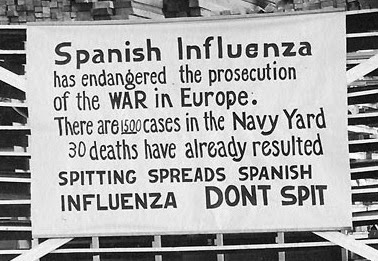
The great flu pandemic hit during the last year of WWI.  More
people died from the flu than from the war.


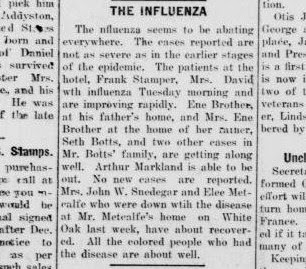
From the November 21, 1918 edition of the Owingsville Outlook
More from my great uncle’s memoirs this week – in this excerpt, he writes about the Spanish Flu pandemic of 1918.   More than half a million Americans died during the outbreak, and worldwide it is estimated that between twenty and forty million people died.   Children of the time period would skip rope to this little rhyme:  I had a little bird/Its name was Enza/I opened the window/And in-flu-enza.  In my father-in-law’s notes, he refers to the 1918 flu as “La Grippe.”
From the William Owen Karrick Story:
During the cold winter of 1918 our town and many others were afflicted with the flu bug.  All of our family, with the exception of my oldest sister Ethel and me were bedfast.  I remember the cold and the snow.  I would ride our old buggy horse to town and get the mail or maybe something from the drug store.  Didn’t see very many people out and around during these trips.  Several families passed away in Salt Lick that winter.
I had many chores to do, such as feeding the horses and cows, milking, and getting in the firewood.  I had an uncle who would come to my rescue about once each week and a relative, Miss Allie North, would come in occasionally and prepare a big kettle of vegetable soup.  I was seven years old at the time. 
During this year I missed a lot of school.  However, I did get in the second grade the next year.  In the second grade our teacher was Miss Genny Norville.  She was from the old south, and I learned that she had at one time early in her life lived on a plantation.  She never would allow us to sing the song “Marching Through Georgia” during our Monday morning gathering.  She was very strict and would not stop urging us until we had accomplished the goal which she had set for us.
In the third grade, we had the same Miss Genny Norville.  She had us learning our multiplication table from one through twelve.  We had to make a map of the United States and put in the states and capitals.  She kept a switch near her desk and when we got too noisy, she would pick up the switch and come down the seat aisle saying, “I am going to hit east and west to stop the noise.” It worked.
In the fourth grade my teacher was Miss Sewall.  One day a circus parade was going by the school and Miss Sewall had gone out of the room.  All of us in the room went to the window to watch the parade go by.  Miss Sewall returned to the room and when I looked around I was the only one still at the window.  She asked for all who had left their seats to hold up their hands.  I held up my hands.  She came back with a ruler and whipped me in one of my hands.  Was I hurt?  I told her that I wasn’t the only one leaving my seat.  Later she had me stay in at recess and apologized for her action.
Later that year, she promoted me and my best friend Demory Parsons to the fifth grade.  My sister Ethel was the fifth grade teacher.  During this time, I received several switchings from my sister.  Someone would do something and I would get the blame.  When we got home, Ethel would say that she punished me to keep the rest from thinking she wouldn’t because I was her brother. 
The next year in the sixth grade my teacher was Miss Christine Alexander.  Now, she was always nice to me.  I must have behaved well in her class.  She brought a Santa Clause suit and had me be Santa at Christmas.  I was much pleased that she had that much confidence in me.  Later in life she told me that I was one of her prized pupils.  She surely was my most loved teacher.
From the first grade to this time in school our playground activities consisted of town ball, playing tag, seesaw, and the game of marbles when weather permitted.
In the seventh grade my teacher was Miss Snedegar.  Along with other studies she was most interested in us mastering our math.  My brother Hugh was in the eighth grade and he was good in math.  Sometimes our teacher would tell Hugh that his problem solving was wrong and Hugh would go to the blackboard and show her that he was right.
In the eighth grade my teacher was also Miss Snedegar.
By this time we were playing baseball and basketball.  I was only four feet eight inches tall at this time.  My nickname was “Wee Willie.”  In the baseball outfield they could hardly see me.  Would you believe me if I told you that I had grown to five feet eight inches by the time that I finished high school?

From White Sulpher to Salt Lick (William Owen Karrick Story: Part 1)


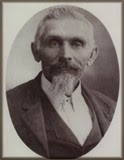
Hugh Karrick, 1845-1925 (my great, great-grandfather)


 My (Ginger’s) great-uncle William Owen Karrick wrote about growing up in Salt Lick.  For those of you who don’t know, my grandfather was Hugh Karrick of Salt Lick, and his brothers and sisters included Travis (father of Ann and Nan), Edsel (former principal at Salt Lick), Louticia (who taught school for many years in this county) and Virginia (who was the wife of Dr. Milburn Wheeler of Morehead).  There are others, but those are the names with which many of you will be familiar.  Some of my papaw’s siblings lived their lives away from Bath County.  My Uncle Bill did, but, as you can tell upon reading his words, Salt Lick always held a special place in his heart. 

From The William Owen Karrick Story:
I was born March 7, 1911 at White Sulpher, Bath Co., Kentucky.  My father was James Thomas Karrick and my mother was Mary Warner Karrick.  I was the seventh of twelve children in the Karrick family.  Midwife Kate B. Nickell of Ewing brought me into this world.
I remember several instances in life when I was three years old – such as sitting on my father’s knee while he played the violin, bouncing me up and down.  Several of my uncles were present at Christmas 1914.  They had brought whiskey from Mt. Sterling, Kentucky, but I can’t remember anyone getting drunk other than my oldest brother, Paul.  On one occasion Paul decided to play drunk-man.  He poured and drank a cup of whiskey and ended up very sick, with a promise never to play drunk-man again.
I remember riding on a roof shingle over an embankment in our side yard when the snow was on.
I remember wanting to go with my older brothers to their rabbit boxes down in our orchard.  Of course they didn’t let me go.
I remember well the day that we moved from White Sulpher to Salt Lick.  We were riding in a buggy – a one horse carriage.  I was four years old at the time.  I was seated on the floor board, Mother (holding my sister Gertrude) and Dad were in the buggy seat, and my brother Hugh was standing up behind the buggy seat.  I thought this trip of approximately three miles was a very long journey.  We finally arrived at our new home in the afternoon.  Three of my older brothers had preceded us with two wagons and our furniture – the last two loads.
My grandfather Hugh Karrick and grandmother Leticia Karrick had moved to Salt Lick earlier.  They lived next door to our house.  As soon as I could, I made a mad dash over to Grandmother’s house.    I had visited with my parents when my grandparents lived on a farm at Mudlick before moving to Salt Lick.  I spent many happy days at my grandmother’s house.  She always had plenty of milk and molasses cookies.  The cookies were in a big jar which I could reach.
At the age of six I started to school at Salt Lick.  I had a teacher named Maude Wright.  I remember the first day very well.  I wanted to go to the same room with my brother Hugh but he insisted and I went to the Junior Order school building across the road from the main school building.  I can’t remember too much of the first year of school except my dad helping me learn to read.  He was always ready to help any of us with our studies.  Our mother was the main spelling teacher. 
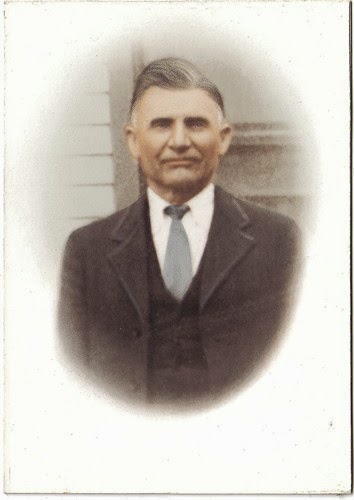
James Thomas Karrick, 1870-1944 (my great-grandfather).