What’s in the Woods? – My dad’s memories of growing up without deer, turkey, bear, and elk in Salt Lick, KY.

In this post, my dad, Joe Karrick, writes about wildlife in Bath County. He told me a while back that he didn’t see his first deer until he was a teenager, and that really amazed me. I guess I found that so hard to believe because I take them for granted. I have seen them outside my kitchen window right here in Owingsville. I just never considered that there was a time when they weren’t around, because in earlier days, wasn’t Kentucky known by native and pioneer alike as a land abounding in wildlife? What happened to the deer?

The answer, of course, is that they were over-hunted and their habitat harmed, which consequently led to them being pretty much wiped out. The history behind that and their reintroduction is quite interesting, and I’ve included a link to the Kentucky Department of Fish and Wildlife’s page on the history of deer management in Kentucky, where a timeline is shown starting with Thomas Walker’s observation in 1750 that deer were “plentiful.”

Yes, deer were plentiful but by just 1775, the Virginia Legislature was attempting to address the diminishing deer population, and by 1810, James Audubon wrote the once plentiful deer had “ceased to exist.” In 1916, deer hunting was banned in Kentucky.

Deer were overhunted but it’s important to not vilify outdoorsmen. Good hunters care about healthy animal populations as much as anyone else, and there have always been those voices of reason. For example, Daniel Boone, that mighty frontiersman himself, is considered to be the first “game warden” in our state after he was appointed to oversee Boonesborough’s “game committee.” I don’t hunt and I eat very little meat, but I appreciate hunters who act as stewards of our beautiful land and its creatures. They are some of the very best advocates for game laws and regulations because they know what can happen otherwise.

From my dad, Joe Karrick:

As a boy growing up in Bath County, Kentucky, during the 1950s, I spend a lot of time in the fields and woods. I pretty well knew what animals were in the woods. There were no deer until the late 1950s, no turkeys, no coyotes, no eagles, no elk, and no bears.

Deer were hunted to near extinction by the start of the 20th century. The Kentucky Department of Fish and Wildlife did a lot of restocking of deer across the state. I started seeing deer in the woods after about 1957. Today’s deer population in Kentucky is about one million.

Turkeys were restocked starting in 1978. I often see turkeys now like the mother and her chicks in the summer on my farm.

I saw no coyotes in the 1950s. Most folks think that coyotes came into Kentucky in 1977-78 when the Ohio and Mississippi rivers froze over and they coyotes walked across them into Kentucky from neighboring states. Coyotes are everywhere in Kentucky now and can be a pest. I grow sweet corn for market – coyotes eat sweet corn!

I never did see a bear in the 1950s, but I did see a track in the mud in the Clear Creek area. Bears have expanded into Kentucky from the east. Kentucky habitats have improved. Forests that regenerated after the heavy wholesale logging in the early 20th century are now mature and are providing heavy crops of nuts, acorns, etc., which the bears love. Bears are now sighted every year in Bath County.

I did not see any eagles in the 1950s. In the last few years, I have seen eagles, even had one fly over my house!

Eastern elk were hunted to extinction in Kentucky by 1860 or so. The Kentucky Department of Fish and Wildlife have introduced western elk into strip mined lands in eastern Kentucky, and the population now is about 18,000.

I have never seen a mountain lion here in Bath County. There have been confirmed sightings in Tennessee and Missouri, and sightings are increasing.

A cougar was killed in Bourbon County in 2014 by law enforcement. It is believed it was a pet that had escaped. My sister, Janet, lived the Clear Creek area and while driving in the National Forest one afternoon late, she swore she saw a large tan, long tailed cat with two cubs. Sounds like a cougar to me!

Dad writes about cougars, and Don’s father, Burl Kincaid, Jr., wrote about them, too, but he called them “catamounts.” His grandfather, Jacob Kincaid, told the story of the “Catamount Hunt of Stepstone” and you can read about that here: https://journalsofwilliamburlkincaid.blog/2014/01/09/the-catamount-hunt-of-stepstone/

Kentucky Department of Fish and Wildlife’s history of deer management: https://fw.ky.gov/Hunt/Pages/History-of-KY-Deer-Management.aspx#:~:text=So%20the%20Kentucky%20Division%20of,Crittenden%2C%20Livingston%20and%20Ballard%20counties.
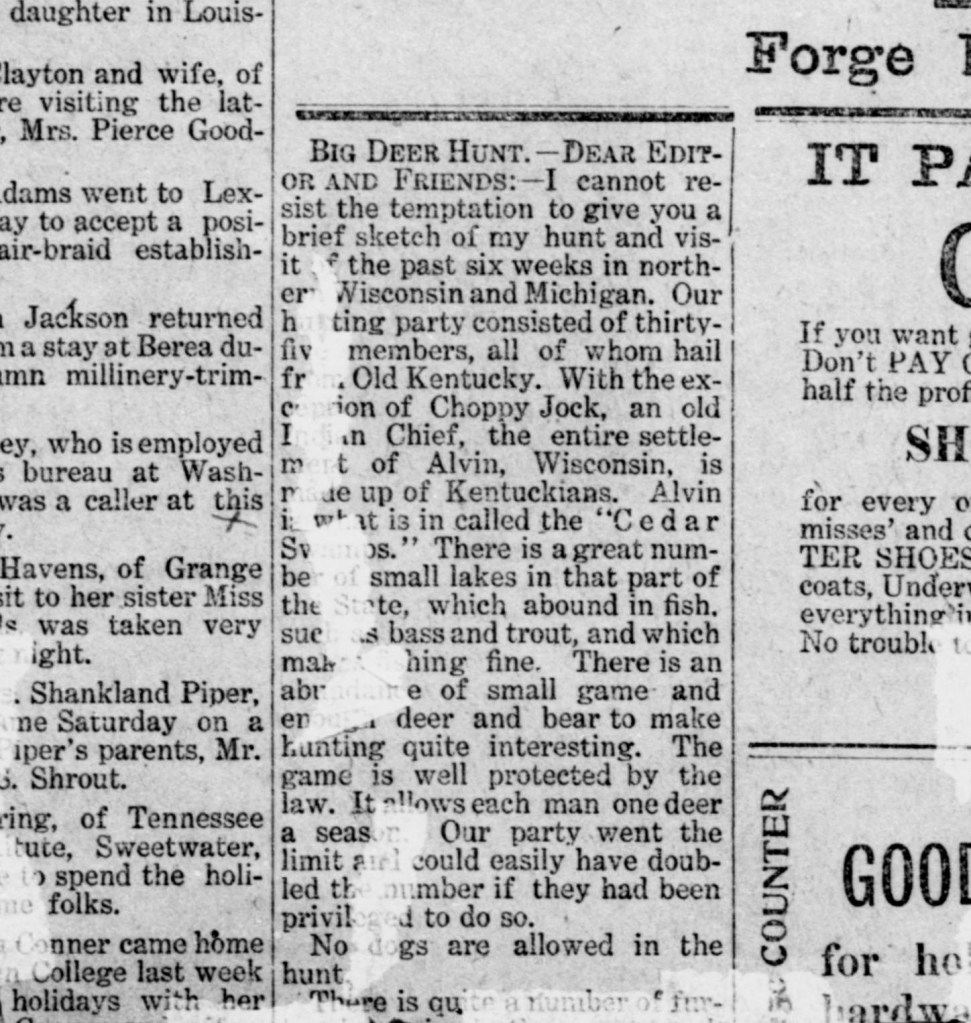
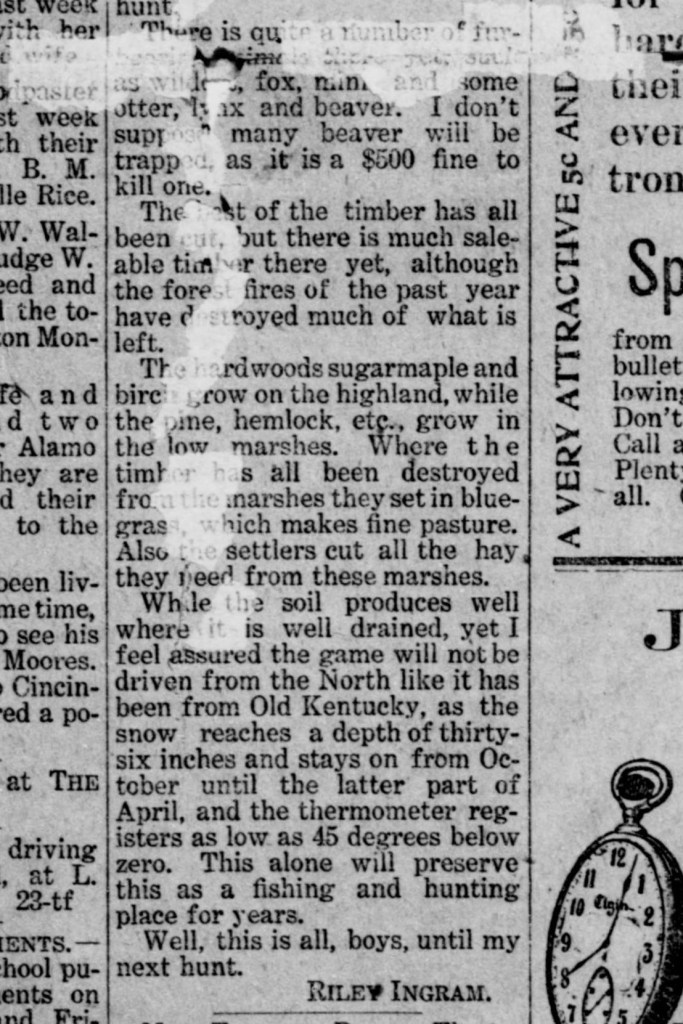
Riley Ingram’s letter to the editor of the Owingsville Outlook (December 22, 1910) describing his hunting trip north. In the following image he mentions how game has been driven from “Old Kentucky.”
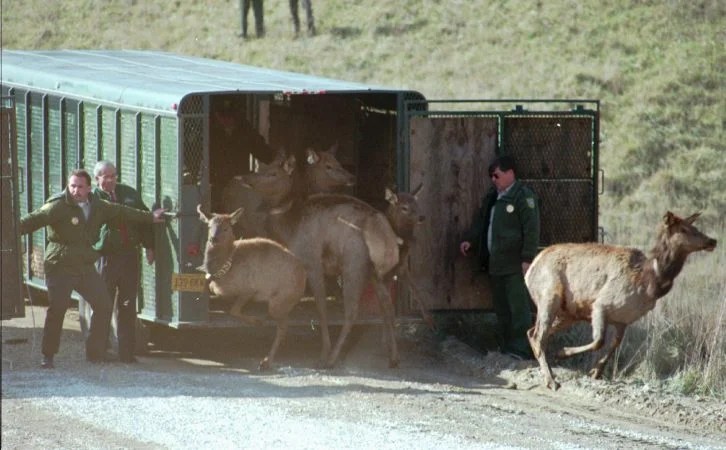
Five elk are let released at an abandoned strip mine near Hazard, KY, in 1997. (Image courtesy of WHYY/PBS).

My dad’s memories of stripping tobacco on the family farm in Salt Lick, Ky.

In this post, my dad, Joe Karrick, reflects on his memories of stripping tobacco. As he notes, tobacco was once grown on almost every Kentucky farm. Indeed, data from the USDA shows that in the 1950s, Kentucky had around 136,000 working tobacco farms, but by 2022 that number had dropped to 984. That decrease came about due to the drop in demand because of increased health concerns over tobacco usage, and also because of a major reform signed into law in 2004, commonly referred to as simply “the buyout.” While tobacco growing may not be the thing it once was, it’s still important to know our history and the work that shaped and supported families for generations.

From my dad, Joe Karrick:

When I was growing up, about all farms in Kentucky grew some tobacco – we were no exception. We grew about 2 – 2 1/2 acres of tobacco every year. In the fall of the year, after the tobacco had cured in the big tobacco barn, it was time to “strip” it. This involved pulling the tobacco leaves off the stalks and tying the bundles of leaves into hands.

Tobacco had to be “in case” in order to work it. “In case” meant that the leaves had enough moisture in them to be pliable and workable. Rainy days and foggy mornings would bring tobacco in case. The sticks holding about 6 stalks of tobacco would be dropped down out of the barn rails. The stalks of tobacco would be pulled off the sticks and stacked tightly in a pile or bulk, and covered to retain moisture.

Burley tobacco hanging in a barn near Lexington, Kentucky. (Image courtesy of the Library of Congress)

There was a “stripping room” attached to the barn on the north side. The entire north side of the stripping room was windows to give light to work by. Norther exposure was preferred because the light was not glaring and more stable throughout the day. A waist high table ran the entire length of the room, about 20 to 24 feet long. A small stove at one end heated the room.

Tobacco was brought into the stripping room a large arm load at a time and placed on the left end of the table. I remember my mom helping strip tobacco. She would strip the bottom leaves off the stalk, place the stalk on the table to the right, and my Dad would then pull the middle leaves off.

A Bowling Green family stripping tobacco. (Image courtesy of the Library of Congress)

Tobacco had to be sorted into about 5 grades as it was stripped. My Mom would pull off the bottom damaged leaves called “trash” and pile them on the floor by her side. Then she would pull off the next grade of leaves, the “flyings” and accumulate them in her hand. Flyings were bright colored, usually tan-yellow with tattered edges. Dad pulled the “lug” leaves. Lugs grew in the middle of the stalk and were large, smooth, solid, tan/brown colored leaves, usually the most valuable. Above the lugs there would usually be two to three “bright” leaves. These were darker than the lugs and showed more red colors. Dad would pull them and make a pile on the floor by his side. He then passed the stalks down to me, and I would pull off the remaining leaves, the “Red.” Red leaves were shorter and darker colored than the Brights and Lugs. Empty stalks were piled on the right end of the table.

We accumulated the leaves in our hands until we couldn’t hold anymore. Then taking a leaf and folding it along the stem, we used it to tie the “hand” of tobacco to hold it together. The tie was made at the stem end of the leaves with all the stems bound tightly together. Thus a hand of tobacco was the quantity of leaves that you could hold in your hand.

The hands of tobacco were then placed on a tobacco stick – a stick would hold 12-14 hands. When the stick was full it would be “pressed.” The stick of stripped tobacco would be put in a press and squeezed flat and made easier to handle.

An old tobacco press. (Image courtesy of the University of Kentucky’s College of Agriculture Collection)

Work would continue all day; carry armloads of tobacco in, strip the leaves off, tie the leaves into hands, carry out the empty stalks, press the finished hands, place the finished pressed hands in a tight pile or bulk and cover.

We usually had a coffee pot on the stove and something for lunch, maybe beans, corn bread or some other basic grub.

We worked together toward a common goal. I learned early where money came from, and I learned the value of hard, honest work. I saw my mom and dad stick together through thick and thing – a good life lesson!

Tobacco placed in the typical baskets and loaded in a truck. (Photo courtesy of the Library of Congress)

Sources: https://www.lpm.org/news/2024-10-22/crop-cashed-out-less-than-1k-ky-farms-still-grow-tobacco-20-years-after-major-reform and https://guides.loc.gov/tobacco-industry.

Thanks for reading!

My grandmother’s gingerbread recipe.

My paternal grandparents were Hugh and Bertha Karrick of Salt Lick, Kentucky, and while thumbing through an old Homemaker’s cookbook, I found my grandmother’s recipe for gingerbread and decided I should try to make it with my own granddaughter, Elliott. She is four years old and loves to mix stuff up in the kitchen, recipe or not! It turned out great and we topped it with homemade whipped topping. Yum.

As I stated in previous post, as I move forward with this blog, I hope to share old local recipes like the gingerbread recipe of my Mamaw’s. I have quite a few cookbooks from the Homemakers, The Women’s Club, local churches, and so forth. These need to be saved for various reasons. First, these old cookbooks give us a glance of the domestic work that women traditionally did, and it’s work that needs to be appreciated, as it has often, at least in my opinion, been undervalued.

Second, old local cookbooks connect us with not only our own ancestors, but also the ancestors of our community, and they offer a glimpse into how information was collectively passed on. The recipes and household tips may seem trivial, but they’re not. I’ve participated in the compilation of these kinds of cookbooks, and it’s been my experience that the recipes are eagerly shared and received. Everybody wants a recipe that works, and in the days before the Internet provided easy access to that, women shared through church cookbooks and hand written notes. Of course, one could get a recipe out of a book or magazine, but not ones “reviewed” by the community by word of mouth after church potlucks and funeral dinners.

Third, these recipes often are from a time before processed foods. If we want to eat healthier, it might not hurt to start with these older recipes that use basic ingredients. You might see the occasional “cream of something soup” called for, but not often, especially in the oldest ones. The recipes, with few exceptions, are simple and call for basic pantry staples.

I hope you enjoy the ones I share, and if you have one you’d like to contribute, please let me know.

The recipe. I followed it exactly as written, although I wasn’t sure what a “moderate oven” temperature would be. I finally went with 350 and baked for about a half an hour, testing frequently to see if a toothpick inserted would come out clean.
Mrs. Hugh Karrick's Gingerbread (Salt Lick Homemakers)

2 cups flour
1/4 tsp. soda
1/2 tsp. salt
1/3 cup butter or shortening
2/3 cup molasses
2 tsp. baking powder 2 tsp. ginger
1 tsp. cinnamon
1/2 cup sugar
1 egg, well beaten
3/4 cup sour milk [buttermilk]

Sift flour once, measure, add baking powder, soda, spices, and salt, then sift together three times. Cream butter thoroughly, add sugar gradually and beat together until light and fluffy. Add egg and molasses, then flour alternatively with the buttermilk, a small amount at a time. Beat after each addition until smooth. Bake in a moderate over [I baked at 350 for about 30 - 35 minutes or until a toothpick came out clean].
The finished product was cake-like and tasty. Elliott likes to go shirtless but insisted on an apron for cooking! I’m going to try to make one for her that fits.
We also made homemade whipped cream, which is super easy to make. 1 cup of heavy whipping cream, 2 tablespoons of sugar, and 1/2 teaspoon of vanilla. Beat until soft peaks form. We overbeat ours a little but we didn’t care.

I took the cookbook to my dad, Joe Karrick, because of the advertising in the back featuring Salt Lick businesses. I wanted to know more about some of them and thought it would also be helpful in dating the cookbook, which Dad decided was probably published in the 1950s.

The Greyhound Restaurant (a Greyhound bus stop) became Greene’s, a place by the creek most of us can recall. Horseman and Powell became Powell’s. Salt Lick Milling had corn meal and flour and was located on the creek bank further into town. Tom Perry operated the establishment.
Jarrett Manufacturing Co. became Reeve’s Lumber. The Gem Theater was located across from the Powell funeral home (or that’s what my dad best remembers). Earl Wills ran E.B. Wills Grocery, and Henry Craig ran the other listed at the top.

Thanks for reading!

Hog Killin’ Weather

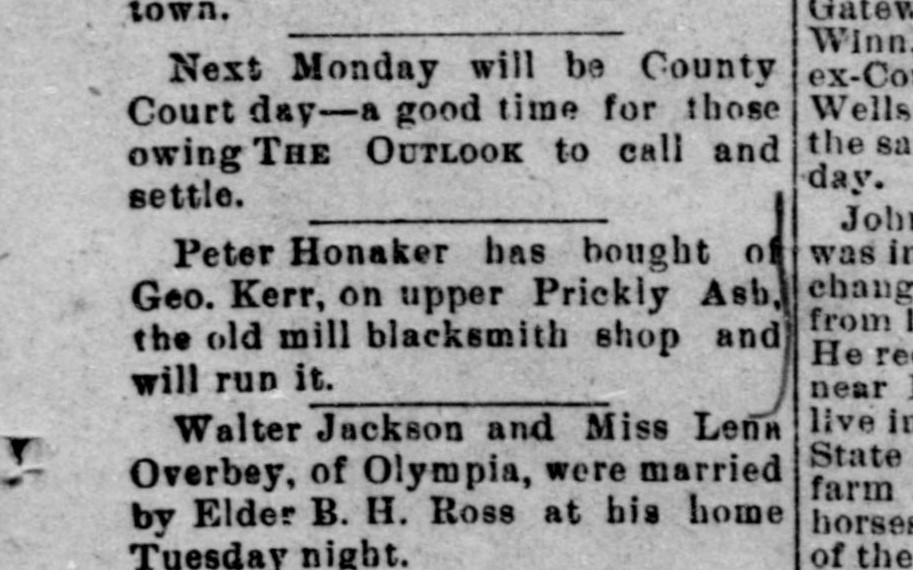
A clipping from a 1908 copy of the Owingsville Outlook, courtesy of the Library of Congress.

A few years ago, as I was looking at digitized copies of the Owingsville Outlook, I happened upon this interesting tidbit in which the writer states, “Hog-killing, Thanksgiving and Christmas to look forward to before the blue days of winter come on.” It struck me that “hog-killing” seemed a celebratory event, one on par with Christmas and Thanksgiving, something to be enjoyed before the gloom of winter set in. I mentioned it to my dad, Joe Karrick, and he started telling me his childhood memories of that event. Of course, this clipping is a lot older than my father, but I would guess the ins and outs of hog killing stayed the same.

“Hog-killing weather” is the phrase my dad remembered. One couldn’t butcher hogs until the weather was cold and was going to stay cold. It needed to be timed well to ensure a good final product. In the clipping below, you’ll note that some in Knob Lick were going to have ruined meat due to the weather warming back up. I would imagine this would have brought terrible hardship for some families. It also makes me wonder how good some would have been at predicting the weather without all of our modern technology. I’m betting there were a few old timers that could “feel it in their bones.”

Clipping from the December 1, 1898 edition of the Owingsville Outlook.

While it may seem gruesome to our modern minds and sensibilities, hog-killing was often a familial event, with uncles, aunts, and cousins coming to lend a hand and visit. Neighbors and friends, too, would join in on the work if needed, and often it was needed because this work had to be finished in a day. While it seems men did the worst and most physical of the work, women labored as well, cutting up meat, grinding sausage, and often seeing to the huge kettles. Children weren’t shielded from the blood and gore either, as you can tell from my dad’s recollection of the event. My mom worries that what he writes is “too gruesome,” but Dad, in true Dad fashion, says it’s just how it was – no sense in trying to pretty it up.

If you have your own memories of “hog-killing time” please leave a comment, or if you’d like to read more from “Papaw Joe” be sure and let us know.

Hog Killin’ Time by Joe Karrick

I grew up on a family farm just south of Salt Lick in Bath County, Ky. My Dad. Hugh Karrick, raised cattle and hogs, and grew corn, hay, tobacco, and sometimes a patch of watermelons or strawberries. Dad raised hogs to sell but usually butchered three to four for our own use. Almost all country folks back then raised hogs for meat and lard.

Hogs were butchered in the fall when temperatures dropped, thus the old saying, “hog killing weather.” If my memory is correct, Dad would choose three to four in the 250 – 300 pound class. I will try to describe the process.

The hog was shot with a .22 caliber rifle aiming at the brain. Death was instantaneous. Dad always had someone else to do the shooting. I think he dreaded it since he had cared for the animals all year. As soon as the hog was shot, someone would slit its throat, cutting through major veins and arteries, and then the hog would bleed out.

The next step was removing the hair from the carcass. This was done by placing the carcass in a “scalding pan,” a large metal vessel big enough to hold the hog. A wood fire was built under the pan, and the water heated to about 150 degrees, scalding temperature. After being submerged for a bit the hair would “slip” or loosen itself. Then came the job of of scraping all the hair off the hog. This took a while. After the hair was removed, the hog was hung head down from a barn rail. The belly was opened up and all the entrails were removed, the heart and liver were saved.

My grandmother had a very large screened in back porch. The hog carcasses were laid out on the porch floor. The heads were removed and saved to make souse meat. There sat a working tub full of hog heads! The carcass was then cut up into the parts that most folks recognize: hams, ribs, shoulder, sow belly or bacon, jowl, and backbone. The feet were saved for pickled pigs feet. The cuts were trimmed of excess fat and then put on benches in the “smoke house” and salted down. It took several weeks for the salt cure to be completed.

All of the trimmings and leaf fats (around internal organs) were saved and made into lard and soap. Two big black kettles were set up in the back yard and heated up with wood fire. Lard was produced in one kettle by heating the fat until it liquified, then, I think, strained and poured into five gallon cans where it cooled down and became white lard. The second kettle was for soapmaking. Again, fat was placed in the kettle, and such soap production requires lye to convert the fat to soap. After heating and liquifying, the soap resolution was strained and poured into flat pans, and upon cooling was cut into cakes of soap.

Meanwhile in the kitchen, my grandmother and her helpers were busy making sausage. A large meat grinder was clamped to the old kitchen table. Meat suitable for sausage was run through the grinder, mixed with some spices, and made into patties. The patties were cooked and then placed in large mason jars for storage.
The process provided food for the family for the coming year.

A lot of folks today think meat comes from Kroger. Meat comes from animals that have been cared for by a farmer. A good farmer’s goal is that his animals have only one bad day in their lives, and that is the day they are slaughtered.

Thanks, Dad, for sharing your memories of “hog killin’ time.” May we all appreciate where our food comes from and honor those farmers who strive to give the animals in their care a good life.

If you want to read more about hog killin’ time, I recommend the following sites: https://afroculinaria.com/2013/01/24/hog-killing-time-comments-and-commentary-on-a-southern-plantation-tradition/

https://blindpigandtheacorn.com/hog-killin-day/

If you need help cooking a ham, a few years ago, the sister of my friend Julie Grannis Carroll was featured in an NPR article about how her family prepared them. Linda and Julie grew up in Fleming County and “putting the ham to sleep” was a family culinary tradition. Here’s a link to that article. https://www.npr.org/2022/12/04/1139534855/kentucky-ham-country-ham-recipes-food

Thanks for reading!

"Cap" Dawson’s Blacksmith Shop

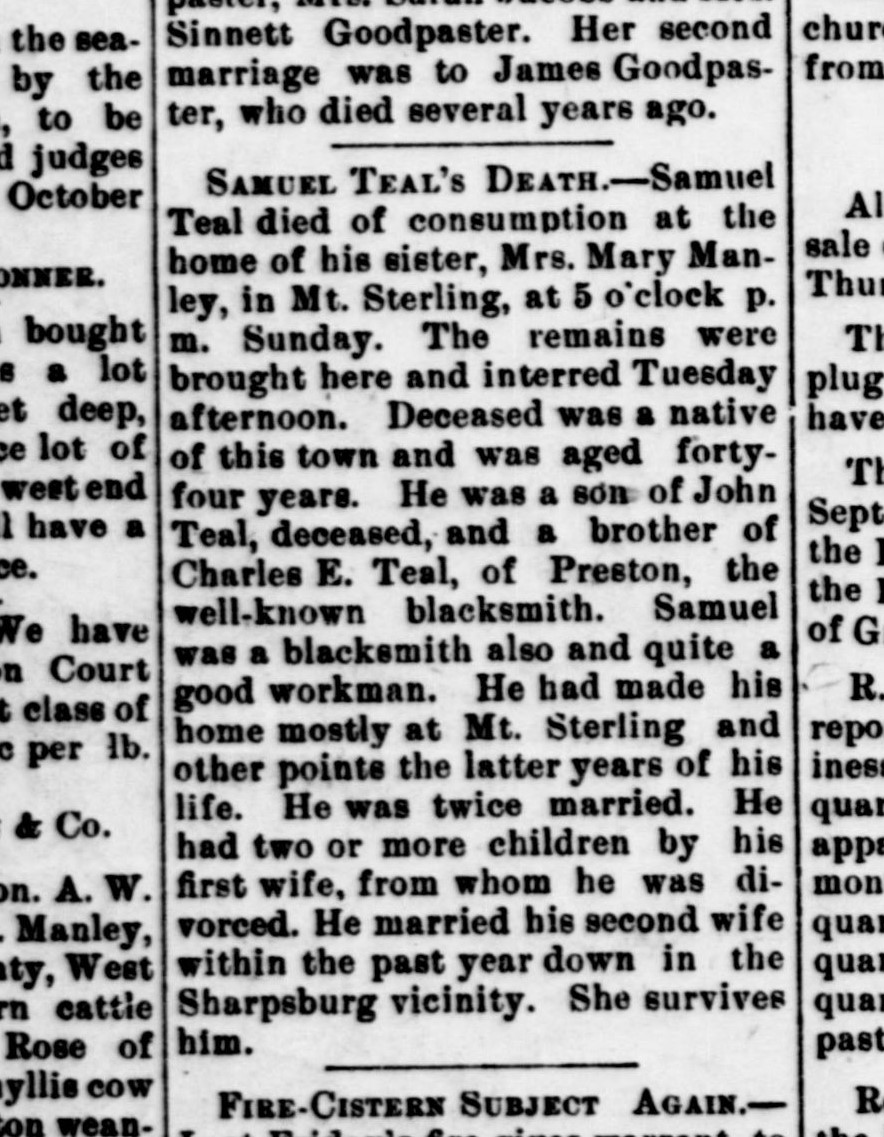
In this entry, Mr. Burl writes about the blacksmith shops that were in Owingsville and specifically mentions “Cap” Dawson.  In his book, The History of Bath County, John Adair Richards also mentions Cap Dawson.

From the journals:

Have you ever watched a blacksmith prepare a shoe for shoeing a horse?  All of our Bath County towns had these shops.  A typical blacksmith had an anvil, a forge and bellow, hammers, cutters, barrel of water, and nails.  The “Smithy’s” shop often was crude with a dirt floor.

Before the automobile took its toll on the blacksmith shops in the late twenties, there were three shops in Owingsville.  Do you recall the name of “Cap” Dawson, Wes Harris, and Jim Reed?  “Cap” was the smith for a shop located where Western Auto* now operates.  Later,  “Cap” operated a shop where the E.L. and A.T. Byron building now stands on the corner of Henry and Oberlein Streets (not “Oberline” as is currently on the sign).
Young boys often frequented these shops as spectators enjoying the works of the blacksmiths.  Often there was excitement when an unruly horse acted up. Blacksmiths would on occasion accept other jobs such as repairing hinges, repairing metal parts of farm wagons, etc. 
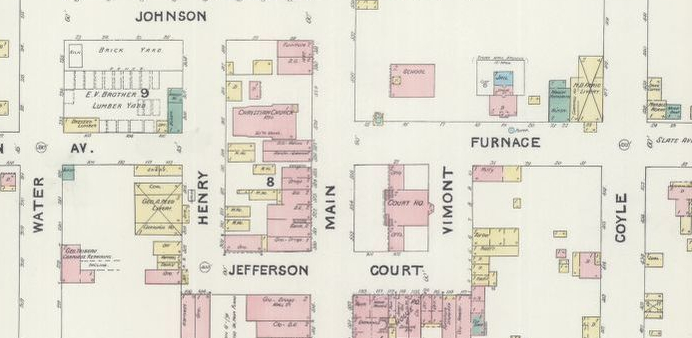
*Western Auto was located where Family Discount Drugs now stands. If you look on the map below, you’ll see a blacksmith shop in that location.

default
Old Sanborn Insurance map of Owingsville, 1891. This map shows a blacksmith shop on the corner of  Oberlin and Water, plus another one by the old jail on Slate Avenue (“Furnace” on the map).  Mr. Burl’s memory of the blacksmith shop would come much later as he wasn’t born until 1916.  Sanborn Fire Insurance Map from Owingsville, Bath County, Kentucky. Sanborn Map Company, Jul, 1891. Map. Retrieved from the Library of Congress, .

sn86069620 1899-04-06 1 4 image 681x648 from 3507x3872 to 5523x5792
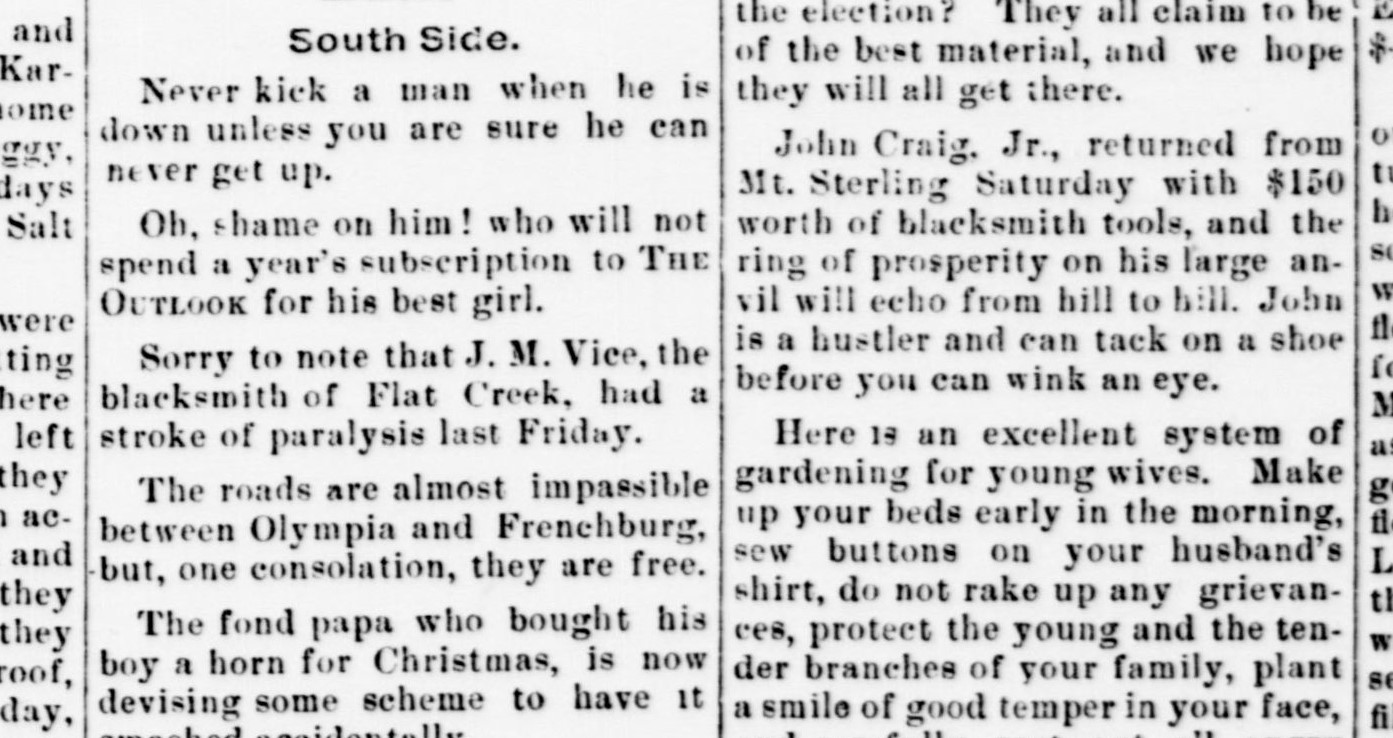
News of blacksmiths from an old copy of the Owingsville Outlook dated 1899. Vice on the left column, while John Craig is mentioned on the right. Owingsville outlook. (Owingsville, Ky.), 06 April 1899. Chronicling America: Historic American Newspapers. Lib. of Congress.

sn86069620 1906-05-31 1 1 image 681x648 from 1347x5842 to 3528x7919
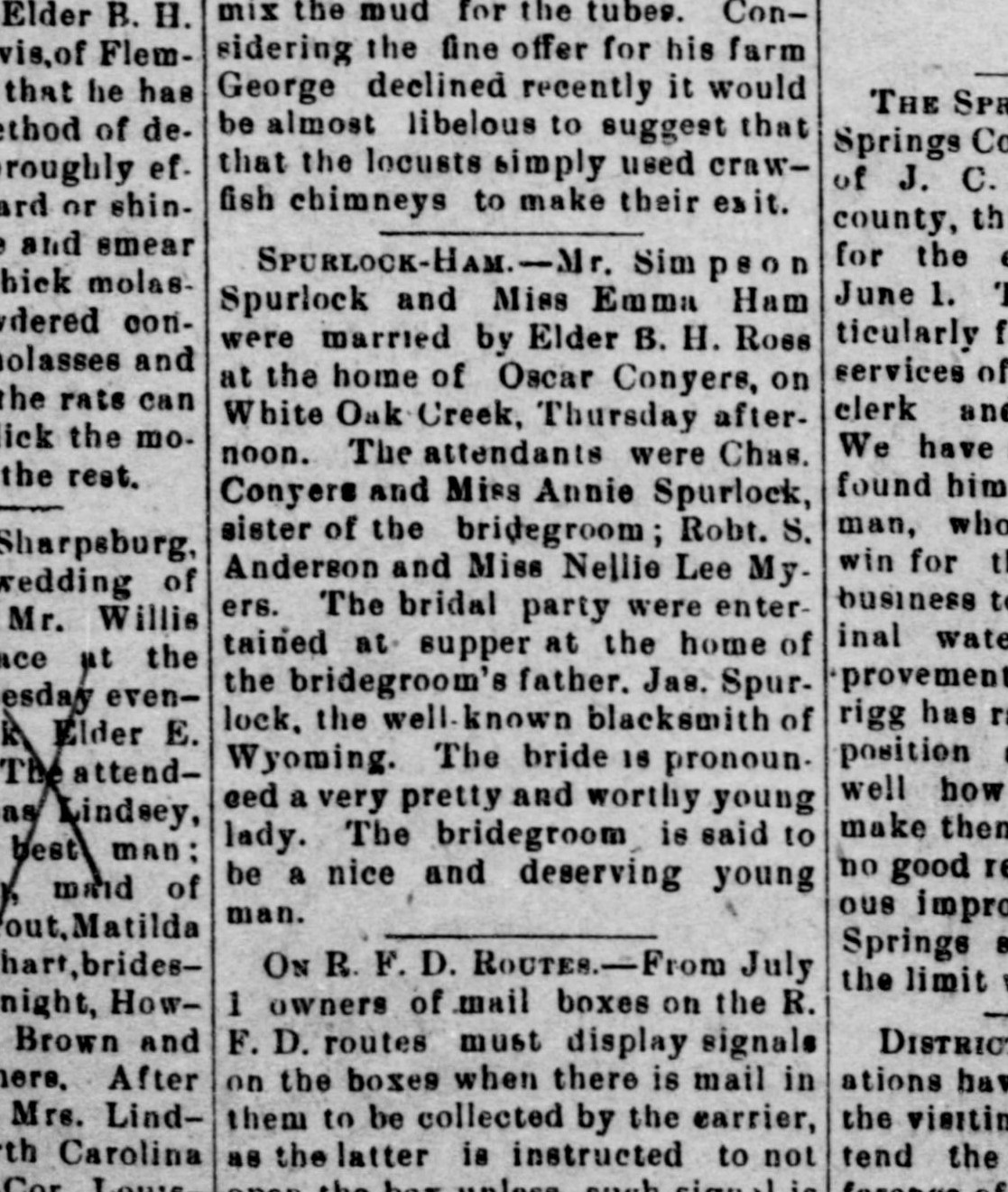
News clipping from 1906 that mentions the Wyoming blacksmith. Owingsville outlook. [volume] (Owingsville, Ky.), 31 May 1906. Chronicling America: Historic American Newspapers. Lib. of Congress.

sn86069620 1903-03-05 1 1 image 681x648 from 401x4395 to 2549x6440
Owingsville outlook. [volume] (Owingsville, Ky.), 05 March 1903. Chronicling America: Historic American Newspapers. Lib. of Congress.

sn86069620 1898-10-06 1 1 image 681x648 from 359x4129 to 2363x6038
1898 newspaper clipping mentioning the blacksmith at Preston. Owingsville outlook. [volume] (Owingsville, Ky.), 06 Oct. 1898. Chronicling America: Historic American Newspapers. Lib. of Congress.

Brigadier General James Virgil Thompson

Reposting in honor of Memorial Day and for D-Day, which is right around the corner.

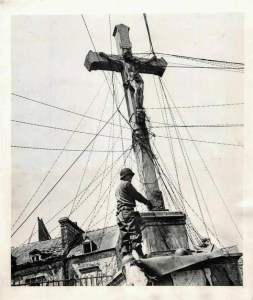
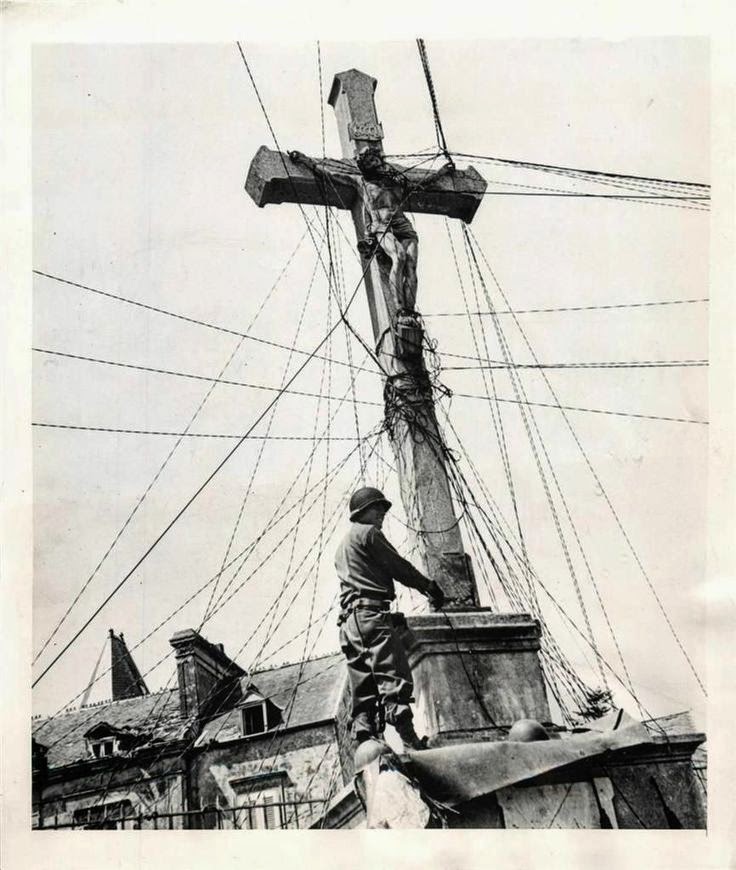
An American G.I. untangles communication wires that had become
wrapped around a cross in Pont l’Abbe during the fighting. (Photo from The Library of Congress)
                                           
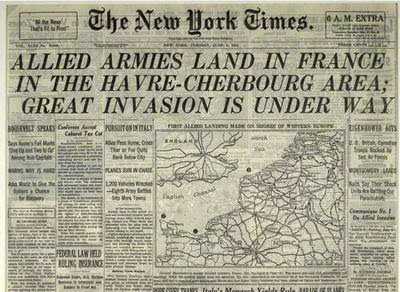
 June 6th of this year marks the 70th anniversary of D-Day, the day when allied forces stormed the beaches of Normandy during WWII.  Bath County can be proud that many, many men from here answered the call of duty during the Great War, but one in particular stands out because his name can be found in the history books as one who helped lead the charge during the Normandy invasion.  That “one” is James Virgil Thompson, commander of the 358th infantry of the 90th Division of the VII Corps.  The 90th Division bore the nickname “Tough Ombres.”   Mr. Thompson’s brothers were Ed, Bascom, Banks, Earle, and Arnold(1).From the journals:“Excuse me, may I have your autograph, Lt Lindbergh?” asked a person in the crowd.

“I am sorry, but I am not Lt. Lindbergh,” responded Lt. Thompson.

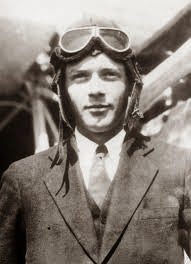
Incidents such as this occurred often.  Charles A. Lindbergh (an international hero) and Virgil Thompson of Owingsville were men of the same stature and their facial expressions were much the same when they smiled.  Lindbergh had just made his historic flight from Garden City, N.J. to an airfield near Paris, France in May of 1927. 

Close to that time, Thompson had graduated from West Point as a 2ndLieutenant.   Charles Lindbergh had been commissioned a 2ndLieutenant in 1925.  The two men were about the same age, looked alike, had that same military bearing, and of course wore army uniforms most of the time.

Lt. Thompson worked his way up through the ranks and it was apparent to those who knew him that he would achieve a high military rank someday.  Virgil served in the Philippine Islands, Panama, and other foreign posts as he climbed from rank to rank.  Finally, after this country was attacked by the Japanese, war was declared by the United States against the Axis powers.

Lt. Thompson became Colonel (Bird Colonel) Virgil Thompson and was a regimental commander.  He led his troops on the beaches of Normandy and was wounded by several machine gun slugs in the abdomen (2)  For many days, it was feared that Virgil would not make it.  Colonel Thompson did recover and returned to the ‘States’ where he was discharged.  He remained as a civilian for a short time, then went back on active duty.

Colonel Thompson was promoted to Brigadier General and went to Korea as an advisor to the South Korean military.  There is no doubt among his friends that Virgil would have risen to perhaps the rank of a Four Star General if he had not been badly wounded in France.

While at West Point, Virgil had the distinct honor of leading the “Army Mule” at an Army-Navy football game.  This was an honor bestowed upon only the top men in the academy. 

Bath Countians saw Virgil on the “Pathe” news at the Majestic Theatre.  Later, a movie starring Richard Dix entitled ‘The Quarterback’ was shown at the local theatre.  The shot of Cadet Thompson leading the mule was cut from the “Pathe” (3) news and inserted in the movie The Quarterback.

Brigadier General Virgil Thompson was a great Bath Countian and American who gave his best for his country.

Virgil seemed to enjoy visiting with people from all walks of life when he would return home on leave.  In the summer when Virgil was at home, he would chat with the boys in the Court House yard and seemed to enjoy it immensely.

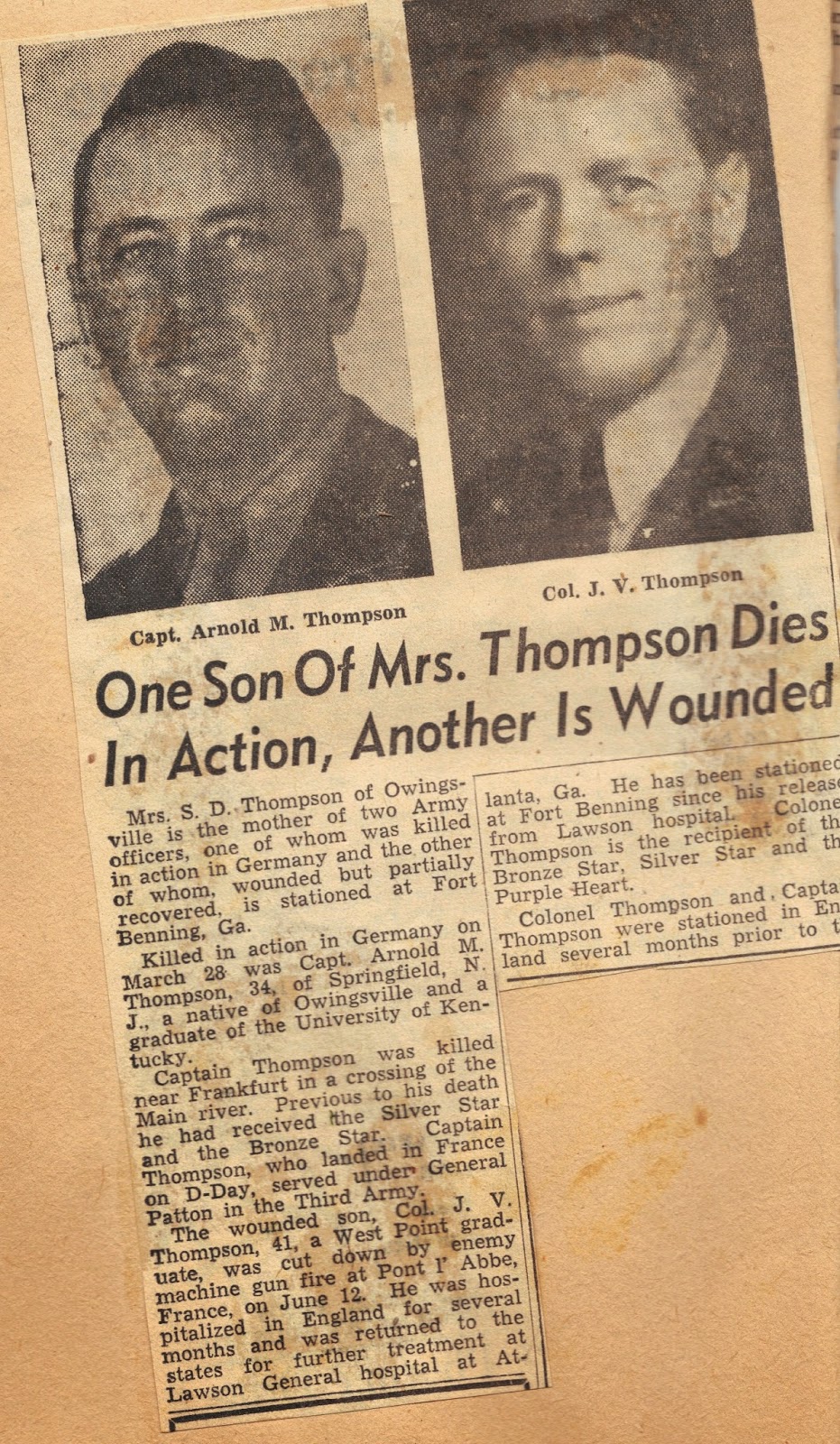
(1) Captain Arnold Thompson, a recipient of both the Bronze and Silver Star prior to his death, was killed in Germany during WWII.   At one point he served under General Patton.

(2) In his book Hanging Sam:  A Biography of General Samuel T. Williams, Harold Myer includes this description of the fighting at Pont l’ Abbe, France:  “The 358thInfantry continued its attack on Pont l’ Abbe with the plan of eventually pushing on to occupy the high ground beyond the town. . . The 358th Infantry encountered severe resistance in its sector and was forced to engage the enemy in hedgerow to hedgerow combat.”

(3) Pathé news produced and distributed cinema newsreels.

If you want to read more about Virgil Thompson and his role in the Normandy Invasion, I would suggest searching for “Col. James V. Thompson.”  My good friend Harvey Thompson is the great nephew of Virgil Thompson, and I want to thank both him and his mother, Miss Ada June, for their help in providing me with more information about this great military hero from Bath County.


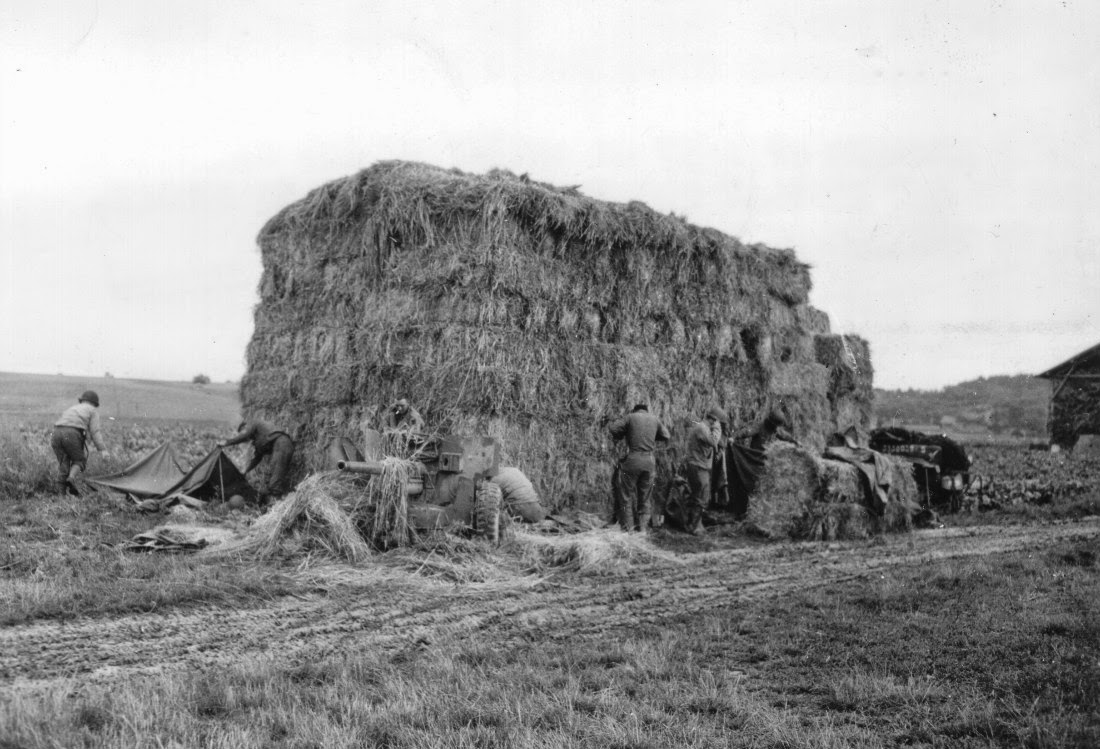
Members of the 358th infantry attempt to hide an
anti-tank gun in a stack of hay somewhere in the countryside of France. (Photo – Library of Congress)
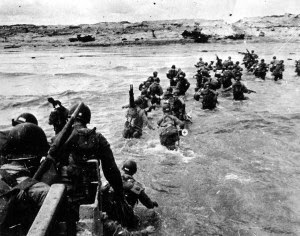
Soldiers advancing towards Utah Beach during the invasion of Normandy. (Photo – Library of Congress)
A newspaper clipping announcing the death of Arnold Thompson
and the wounding of J.V. (Virgil) Thompson. (Clipping courtesy of the Thompson family.) 
Charles Lindbergh, who does indeed bear
a resemblance to Virgil Thompson. (Photo – Library of Congress)

TV in 1934? A Trip to the Chicago World’s Fair.

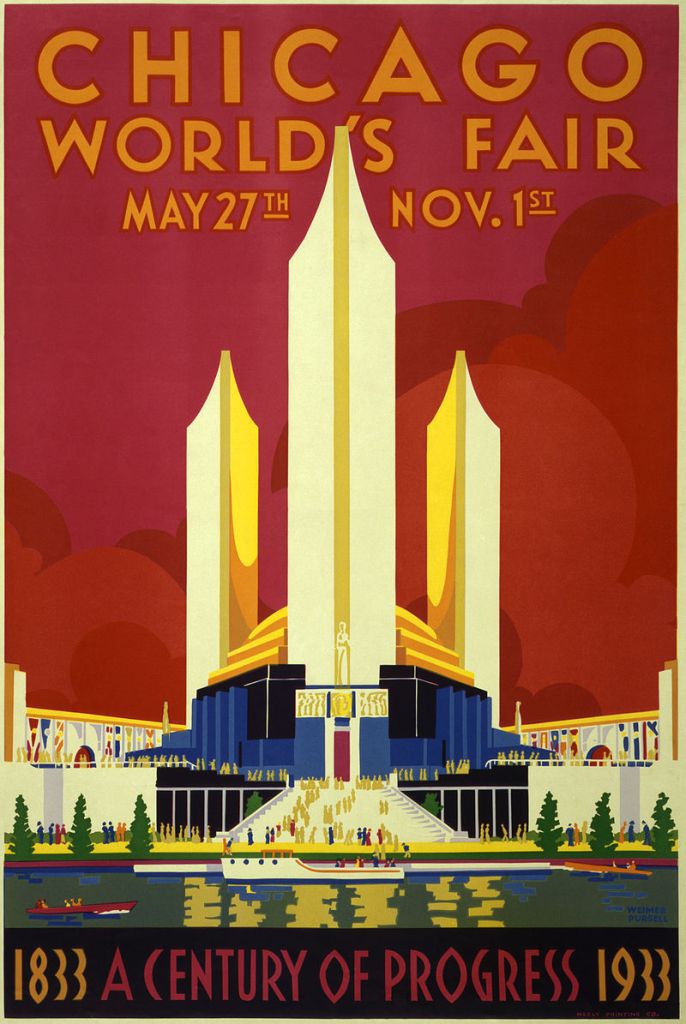
By Weimer Pursell, silkscreen print by Neely Printing Co., Chicago – This image is available from the United States Library of Congress

From Daddy’s notes on the 1933-1934 Chicago World’s Fair:

What is Television? Who are you trying to kid? Projecting a picture and sound through the atmosphere? No, we believe this to be some kind of joke!  Well, let’s go in and see about this thing called television.

Five young Owingsville men, after hearing all the glowing remarks about the Chicago World’s Fair(also known as “A Century of Progress”), decided to journey to this big city. The young men were, Richart Brother, Bronson Snedegar, Burl Kincaid Jr., John H. Elliott, and Theodore Crouch. Theodore was older than the others and owned an automobile, so the other four supplied the gas and oil. Off and away they went to a week of fun and education. 

    
This was in 1934 which was in the heart of the so called “Great Depression.”  For those of you who do not remember that era, there was little money in the United States. Many families found themselves with every member unemployed. If you did not live during those years, there is no way that you can imagine what some fellas lived through.  

Upon entering the building which was built for the display of this new media called “television,” we were surprised at the shape of the auditorium or theatre (we did not know what to call it). The building was narrowly rectangular with a telecasting booth in one end and a large TV screen in the other. The large center section had seating much like movie theatres. Since it has been some 60 years since being privileged to witness a great electronic device being publicly born, the writer does not have much idea as to the number of seats. 


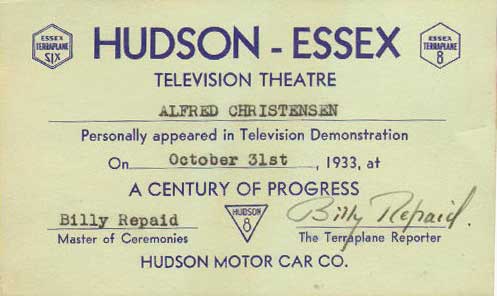
The young men were seated together and were anxious for the program to start. The announcer made some glowing remarks about the fair in general and TV in particular. A program was presented (do not remember much about it) but the presenters were concerned that the audience might think the whole thing could be a fake. To dispel any thought of the presentation on the screen being a fake, a person surveyed the audience and asked certain persons to go to the telecast booth. It seemed that he chose one person from each group. The writer was chosen from our group and got to be on television!

Daddy spoke of this trip often. He and others were only eighteen years old. He brought back the official book from the fair and we still have it.

His favorite area was the Little Town. It was an exhibit of everything small, with an entire home and its furnishings built on a small scale, but still big enough to enter and walk around.  ~ Don Kincaid

A participation card from the television exhibit at the Chicago World’s Fair. Image courtesy of https://www.earlytelevision.org/chicago_1933_worlds_fair.html

For more information about the Chicago World’s Fair of 1933-1934, you can visit the following links:

https://en.wikipedia.org/wiki/Century_of_Progress

https://www.earlytelevision.org/chicago_1933_worlds_fair.html

DARNELL FAMILY COLORIZED PHOTOS

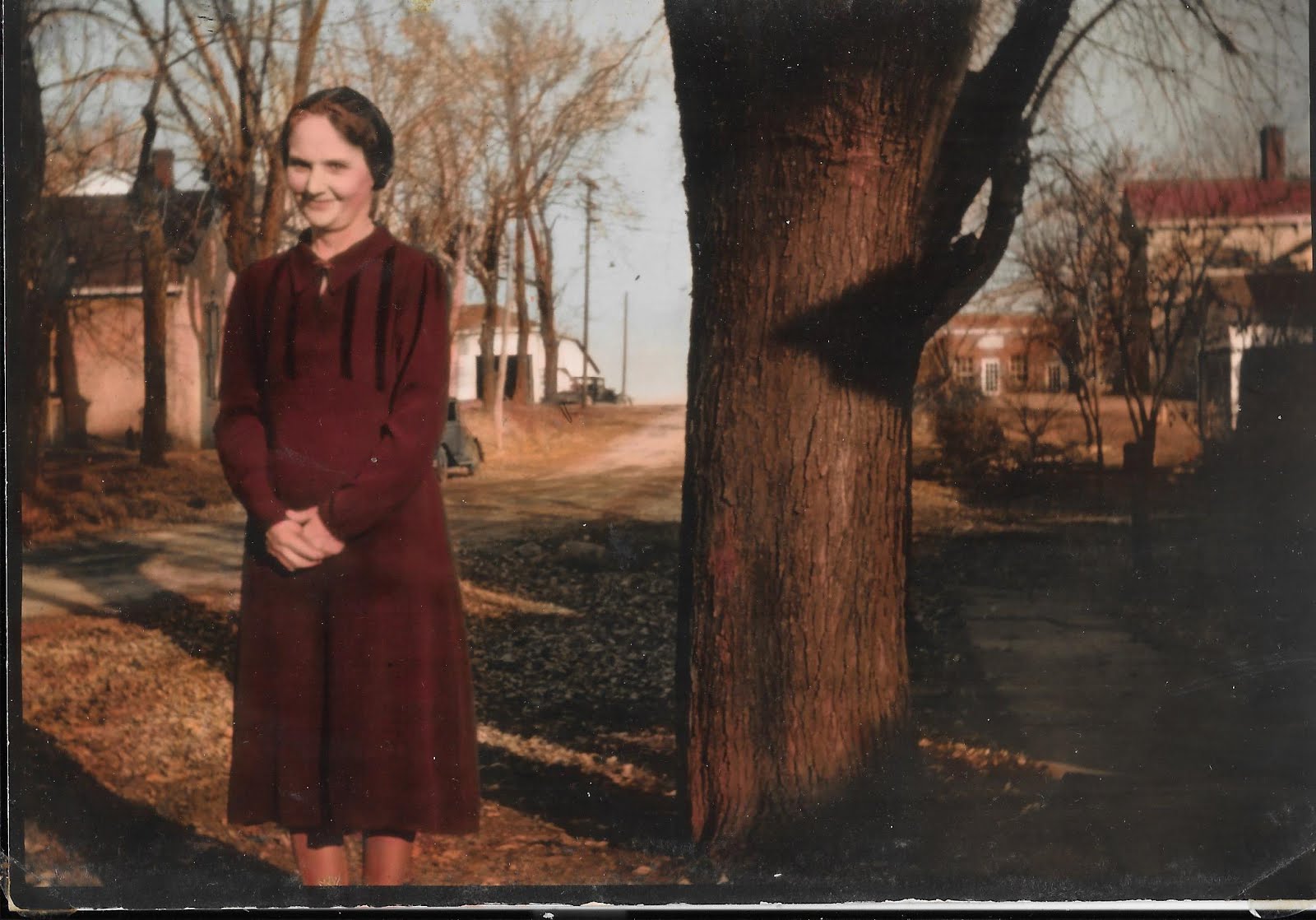
This photo of my grandmother Sallie Darnell was taken in about 1940 in front of their home on Coyle St. in Owingsville.  Mr. Jeff must have been at work at the bank.  In the background you can see three buildings still in use on Slate Ave. in Owingsville.

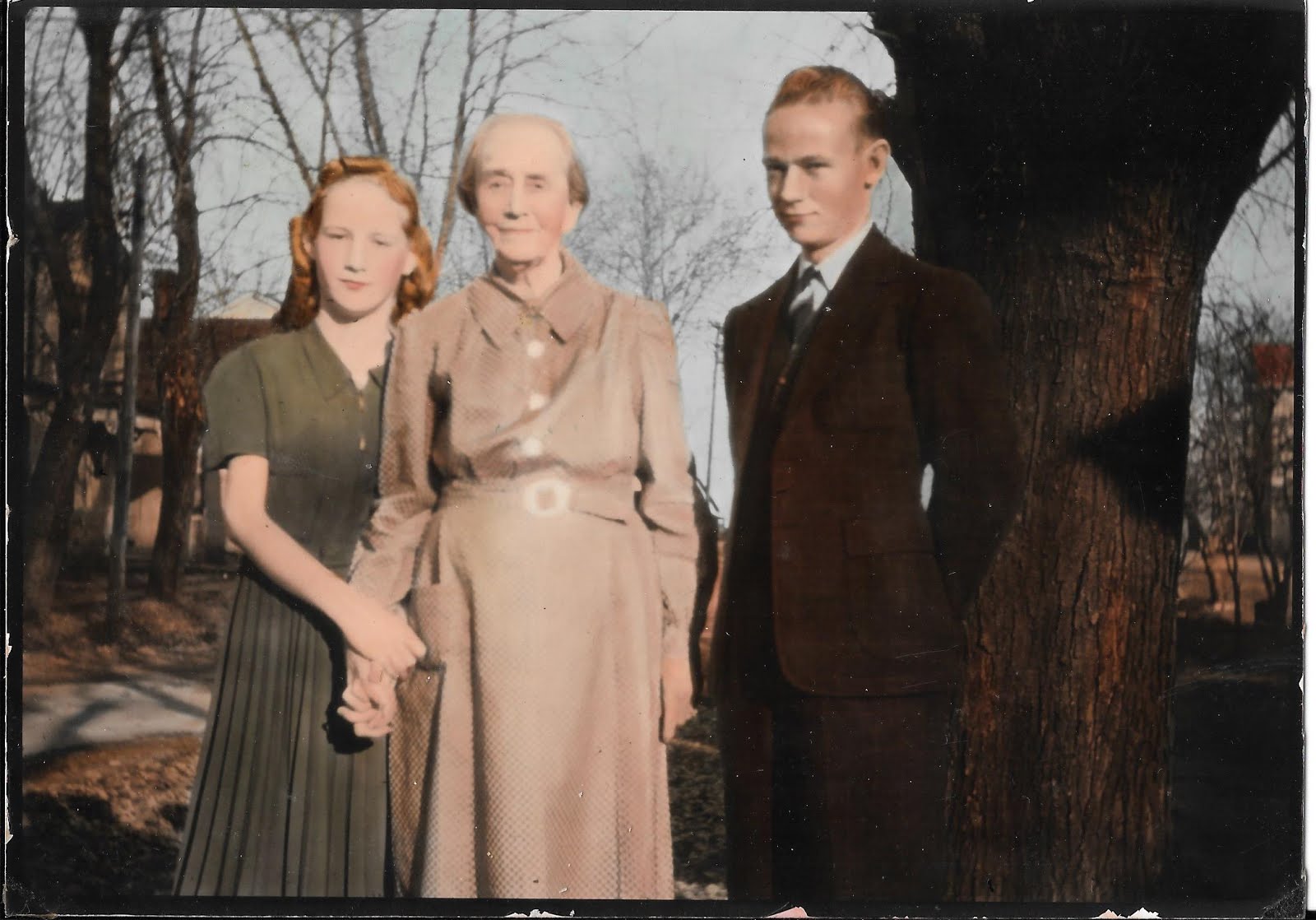
Apparently the photo was a specialty picture of some kind.  I’ve been told it started as a black and white, was colored in and then photographed again.

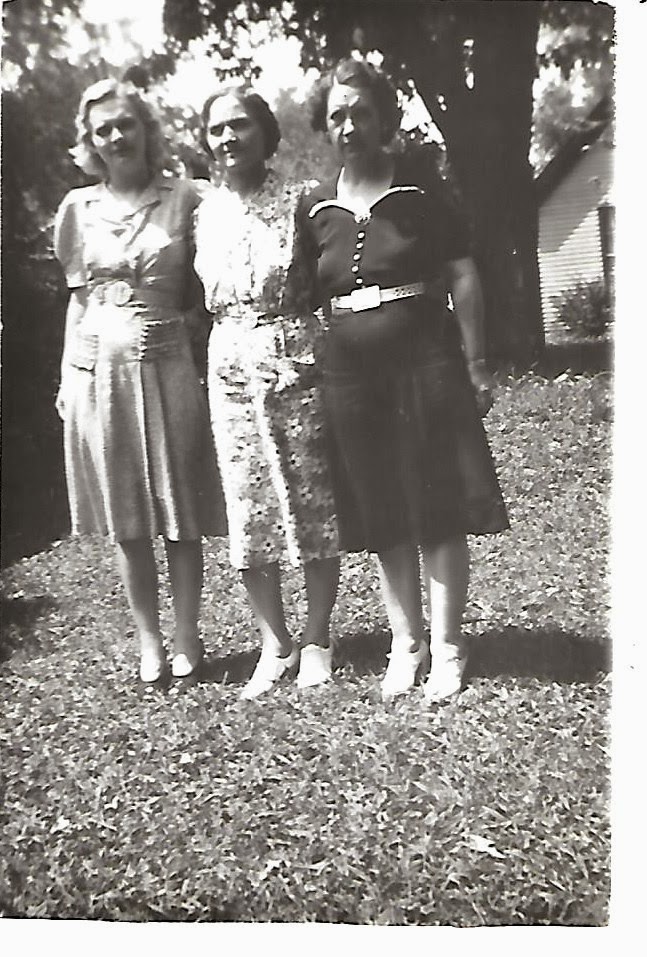
This picture was apparently taken the same day.  On the left is my mother, Doris Louise Darnell. Just guessing I think she was about 15. I think in the middle is my great grandmother Mrs. Rose A. Darnell, wife of Isaac R. Darnell.  She died in 1941. On the right is Donovan L. Darnell, my uncle. When I was a kid he jokingly called me Jack.  I’m proud to be named for him. ~ Don

Sleigh Riding


Mr. Burl’s old sled.
It’s a Flexible Flyer and about 90 years old.  


This week, Don writes about the sleigh riding stories his father used to tell.  We wanted to get this up while the snow is still either on or fresh in our memories, and I would have done it sooner, but I’ve misplaced a bit of writing that Mr. Burl himself wrote about it.  When I do find it, I’ll update this post, but for now we’ll share what we remember him telling us.  

We often heard sleigh riding stories about Daddy and his friends. Even though he and his first cousin,R.W.,* were both hurt badly sledding, they absolutely loved it! The hill to Sharpsburg was in front of their houses and when they were kids it was not paved.  It was not only gravel, but also very crooked, and it wasn’t until the 80’s that the whiplash curve at the bottom was straightened and a new bridge was built over Prickley Ash stream. 

Because of the curve at the bottom, the boys would bail out before they got to it if possible. Many were injured because of the bail out and the barbed wire along the road. Daddy’s injuries caused him to miss six weeks of school. In his words, he “peeled the hide” off his shin all the way down to the ankle. A local doctor made a daily house call to check on him and to put Mercurochrome on it and change the bandages.

R.W. had a bad sleigh wreck as well.  He was badly injured and would eventually need surgery – surgery which he did not survive. His brother Dr. Owings Kincaid was there with him when he died at St. Joseph Infirmary in Louisville.

Daddy also loved telling about tying the sleds to some old car and being pulled around town. He always bragged that his sled was the only one to survive all the crashes. Our guess on its age is about 90 years old.  It was new about 1926 when Daddy was ten or so.  We still have the sled and it still goes fast! ~Don

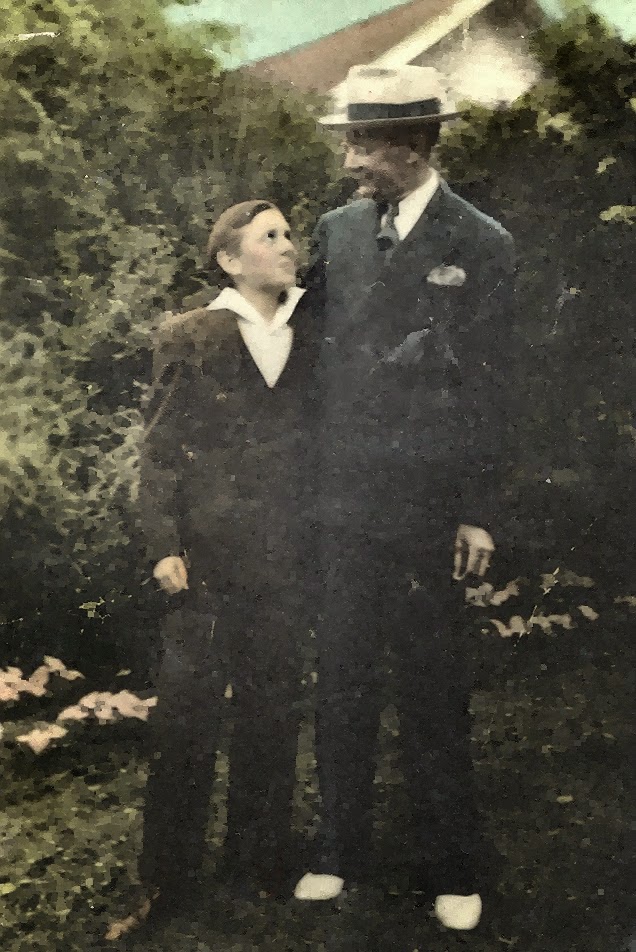
A young R.W. with his father Reuben.
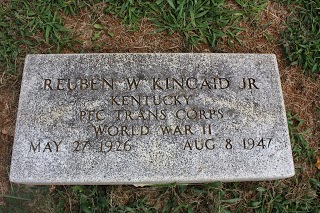
R.W.’s grave marker at the Owingsville Cemetery.
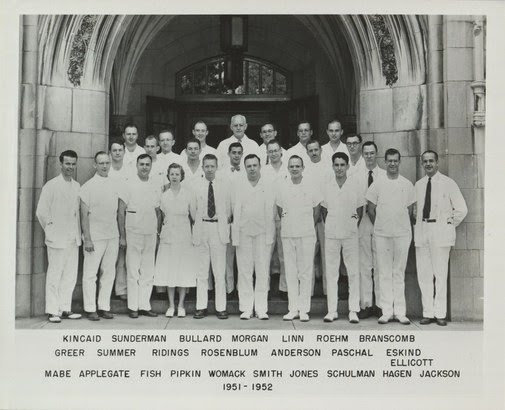
Owings Kincaid (back row on the far left) when he was a resident at Vanderbilt.  He would go on to have a very successful career at the Mayo Clinic.
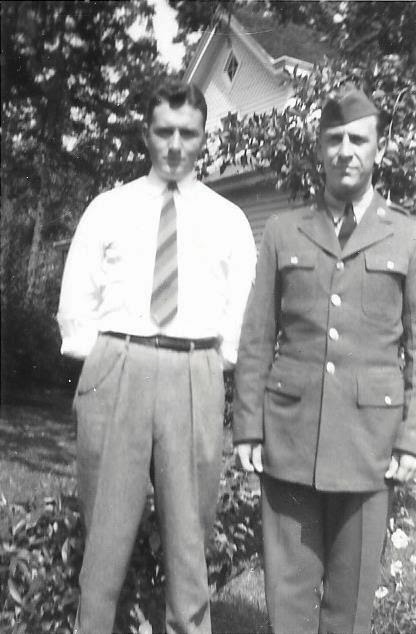
Owings and Burl Kincaid, first cousins and life-long friends.  Both men (and R.W.) served in WWII.


Here is a link to Owings Kincaid’s obituary.  Somewhere we have correspondence between Mr. Burl and Owings (who remained close throughout their lives), and when we get to that we’ll share any items that might be of interest.

A Letter From Donovan Darnell, Dated 1933

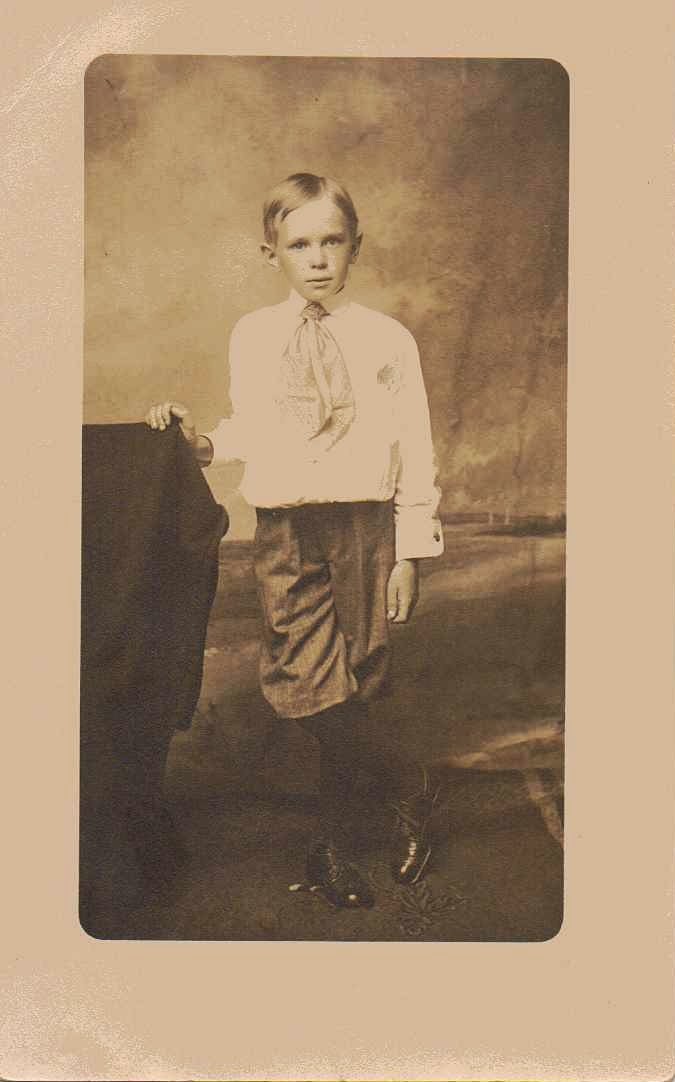
Donovan Darnell as a child.  He would grow up to serve in WWII, graduate from Morehead State, teach Industrial Arts in Greensboro, N.C. and, most importantly, start a beautiful family (even though they do sometimes root for the wrong team in basketball!).  
 
Happy 2015!  Our first post of this new year is an old letter written by Donovan Darnell.  “Uncle Don,” as we all called him, was not only the brother of Doris Darnell Kincaid (Don & Bill’s mother), but also a lifelong best friend of Mr. Burl.  In fact, Burl and Donovan were close friends long before Burl and Doris got involved romantically. Don Kincaid is named after Donovan Darnell, but “Uncle Don” disliked his name and called his nephew “Jack” for years.
 
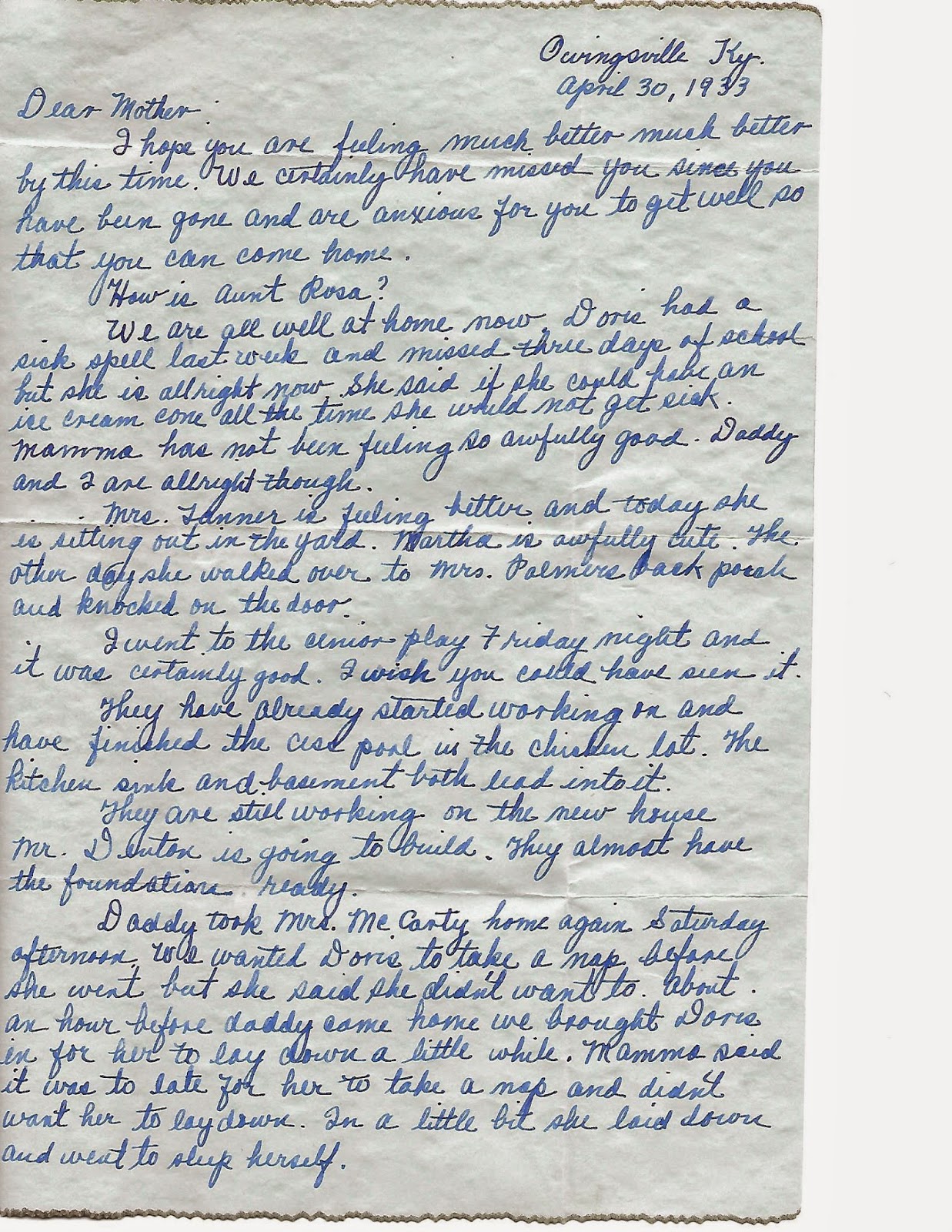
In the following letter dated 1933, Donovan would have been 15 years old.  Miss Sallie, his mother, was sick and in some sort of treatment center (perhaps a sanatorium – Uncle Ruby also went to one and we’ll share his postcards later) and he has written his beloved mother, filling her in on what’s going on at their home on Coyle Street in Owingsville (see pictures of Coyle Street at end of this post).  Doris, by the way, would have been 7 years old and due to contracting polio when an infant, was left with lifelong health problems.  She always said her parents, especially her father, spoiled her because of that, and it was often left to her brother to discipline her.  
 
Owingsville, Ky
April 30, 1933
 
Dear Mother:
          I hope you are feeling much better by this time.  We certainly have missed you since you have been gone and are anxious for you to get well so that you can come home.
         How is Aunt Rosa?*
         We are all well at home now.  Doris had a sick spell last week and missed three days of school but she is allright now.  She said if she could have an ice cream cone all the time she would not get sick. Mamma** has not been feeling so awfully good.  Daddy and I are allright though.
         Mrs Tanner is feeling better and today she is sitting out in the yard. Martha is awfully cute. The other day she walked over to Mrs. Palmer’s*** back porch and knocked on the door.
         I went to the union play Friday night and it was certainly good.  I wish you could have seen it.
        They have already started working on the cess pool in the chicken lot. The kitchen sink and basement both lead into it.
         They are still working on the new house Mr. Denton is going to build. They almost have the foundation ready.
         Daddy took Mrs. McCarty home again Saturday afternoon.  We wanted Doris to take a nap before she went but she said she didn’t want to. About an hour before daddy came home we brought Doris in for her to lay down a little while. Mamma said it was to late for her to take a nap and didn’t want her to lay down. In a  little bit she laid down and went to sleep herself. 
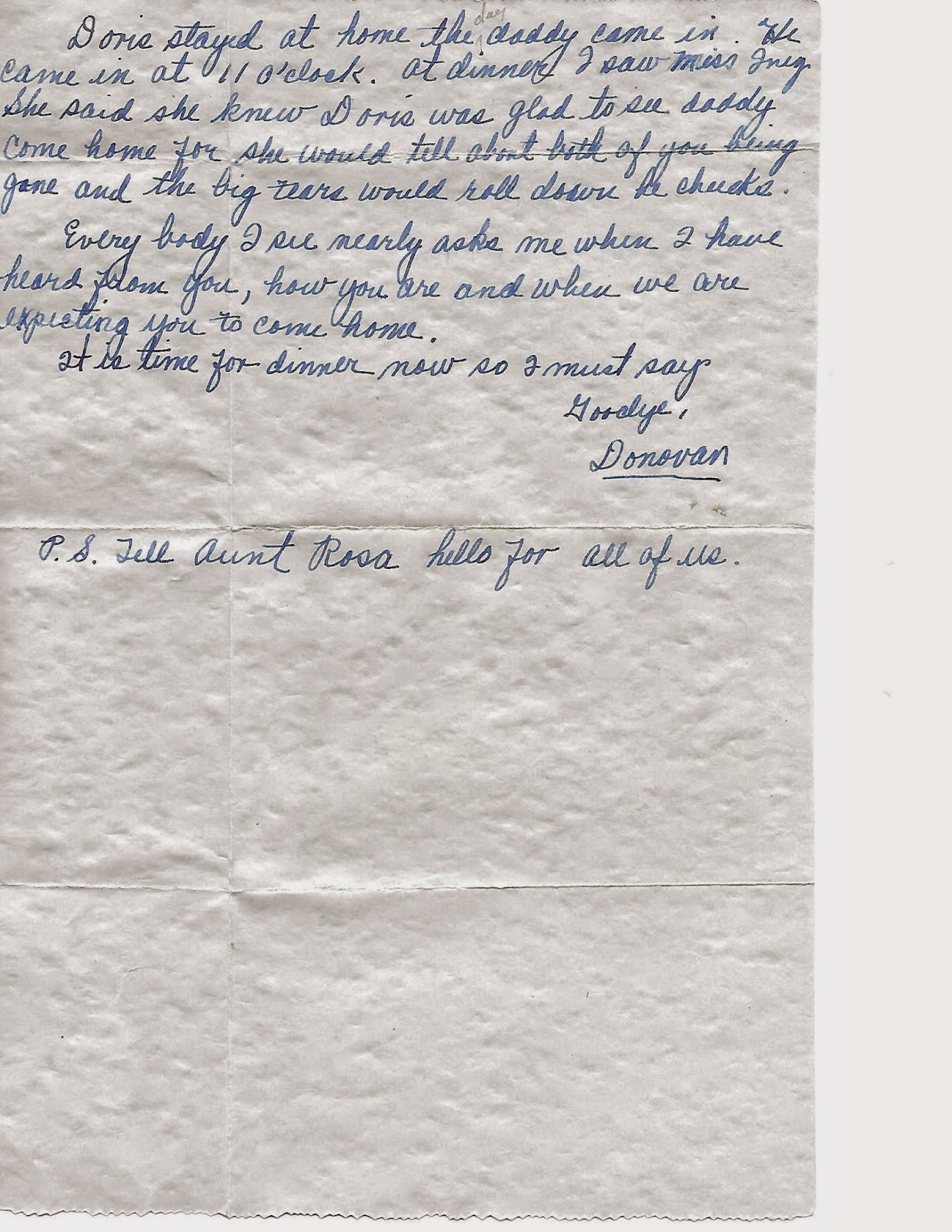
         Doris stayed at home the day daddy came in.  He came in at 11 o’clock. At dinner I saw Miss Inez. She said she knew Doris was glad to see daddy come home for she would tell about both of you being gone and the big tears would roll down her cheeks.
         Everybody I see nearly asks me when I have heard from you, how you are and when we are expecting you to come home.
         It is time for dinner now so I must say
        Goodbye,
        Donovan
P.S. Tell Aunt Rosa hello for all of us.
 
*Rosa Jones
**The letter is written to his mother – we’re not sure who “Mamma” is, although our guess is his grandmother.
***Mrs. Palmer lived in the house on Coyle Street right by the Baptist Church.
 
We don’t know who the other people are or where Mr. Denton’s house would have been.  Please leave a comment or let one of us know if you have information you want to share.


Donovan, Sallie, and Jefferson Darnell, 
standing on the Coyle St. sidewalk with
 Ida Jones’s house behind them. The Jones house is no longer there.


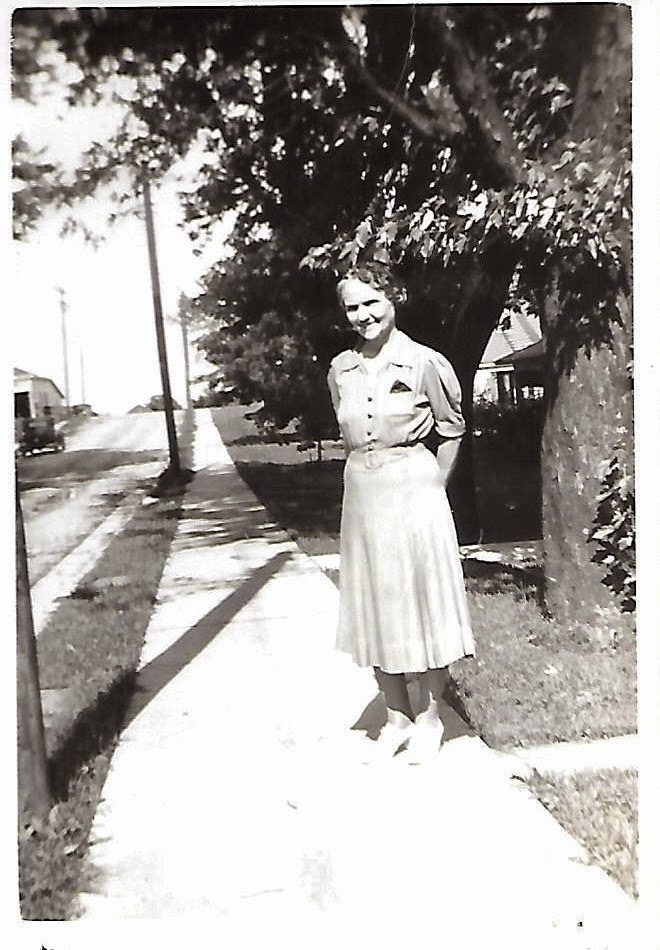
Sallie Darnell on Coyle Street in Owingsville, KY.  Note the old car in the background, pointing towards Slate Avenue. 
Family Drugs is currently located in the building on the left.


Sallie Darnell (in center) with two unknown women.  If you know who they are, please leave a comment or send us an email.


Cousins Donovan Darnell and Darnell Snedegar on a day trip to White Oak.  They were driven by Jeff Darnell (Donovan’s son) to a
   cemetery located on the back of what was once the family farm.  


Jefferson Lee Darnell (Mr. Jeff to most everybody) with Sallie and one of the children. Jeff Darnell was a banker and  also evidently a big softie when it came to sick little girls! He built several houses on Coyle Street and was mayor of Owingsville in the 50’s.

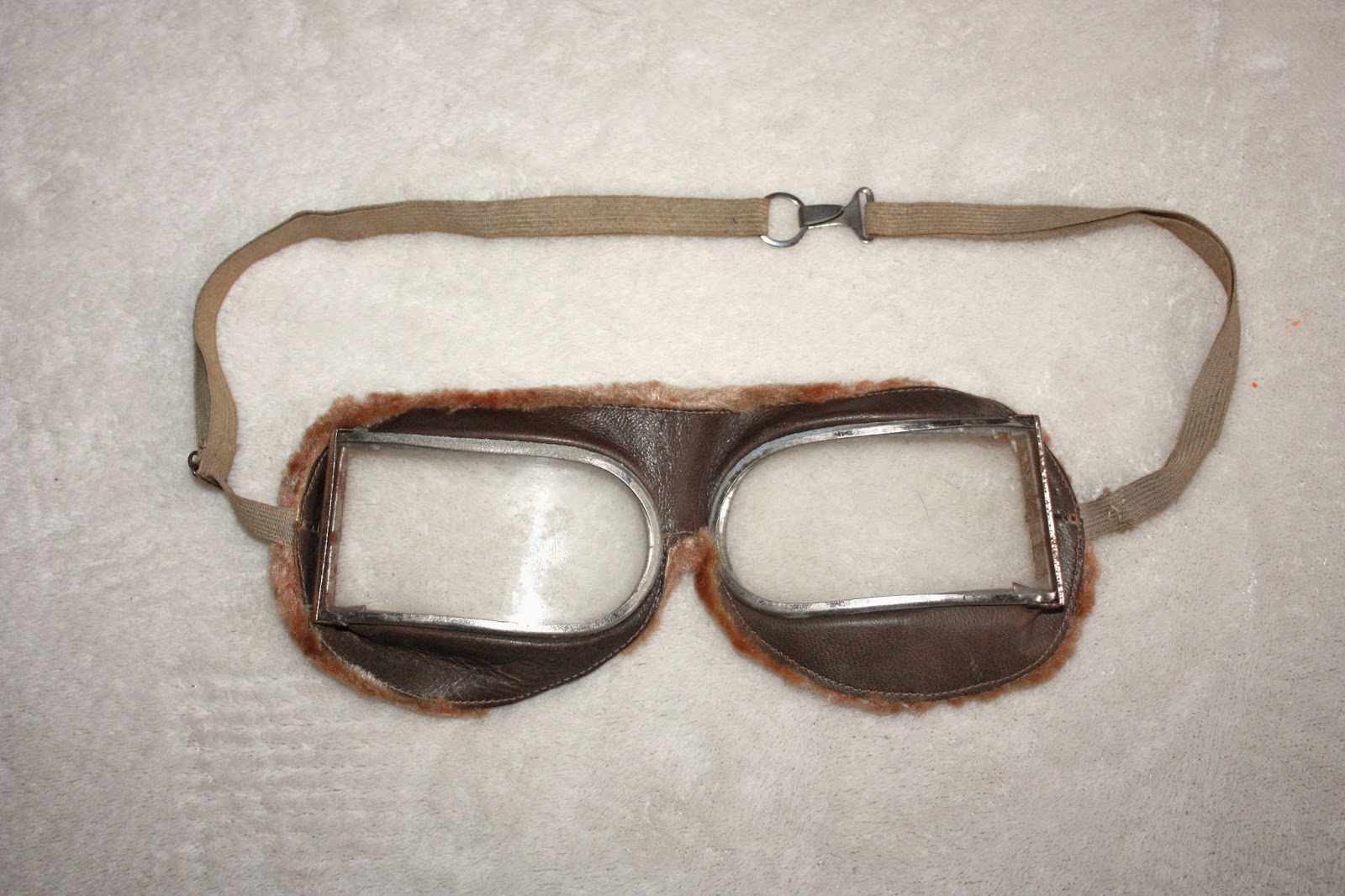
Jefferson Darnell’s driving goggles.  “Mr. Jeff” left home for Colorado at one point, aiming to start a business there, but ended up coming back home.  These goggles now belong to his great-grandson Jacob Kincaid, who has left home for China.  He didn’t wear the goggles!