What was Owingsville and the world like in 1916?

There was no I-64. It was built in the 1960’s. The main road was the Midland Trail which was gravel.
The automobile of the day was the Ford Model T and they were all black.
To go somewhere of any distance, you went to Preston or Olympia and caught the train.
US 60 as we know it did not exist until 1926, when they built it out of concrete.
There were no microwave ovens, stoves of the day were probably wood burners.
There was no natural gas for gas stoves and the main heat was coal burning stoves.
No clothes dryers existed – you hung them on the clothes line!
Half of all homes in the US didn’t have electricity. Most still used oil lamps.
High Street was a gravel road and all the houses on the street had fences because . . .
turkeys, cattle, pigs were all driven or walked down the main streets.
Morehead State University at that time was called Morehead Normal School.
There were no…..
computers,
cd players,
ipods,
cellphones,
air conditioners
televisions,
cable for tv’s,
Internet,
mini calculators
Subway, McDonald’s, Dairy Queen, or Pizza Places,
Only 8% of all homes in the United States had a telephone.
A loaf of bread cost 7 cents and sugar was 4 cents per pound.
Most families had chickens, pigs and a garden….in town!
The population was 942 – in 2010 the population was 1592
Owingsville was 105 years old – this year it is 205 years old
Owingsville was exactly 1 square mile – it is now approximately 2 ½ square miles.
There were no water faucets in the house,  Water came from wells – the city water works were built in 1927.
There were no indoor toilets.  Every building had a privy or outhouse in the back yard.
There was no city sewer system – it was built in the mid 1950’s.
There were no street lights.
No weather radar or army radar existed.
No radio, if you wanted the news, you read the newspaper.
For fires, huge cisterns were built, many of which still exist.
World War 1 was being fought in Europe.


Daddy talked or wrote about all of these things at one time or another. He loved history and the memories of his town. He was born on February 23, 1916.  This coming Tuesday, February 23, 2016 he would have been 100 years old.

Don
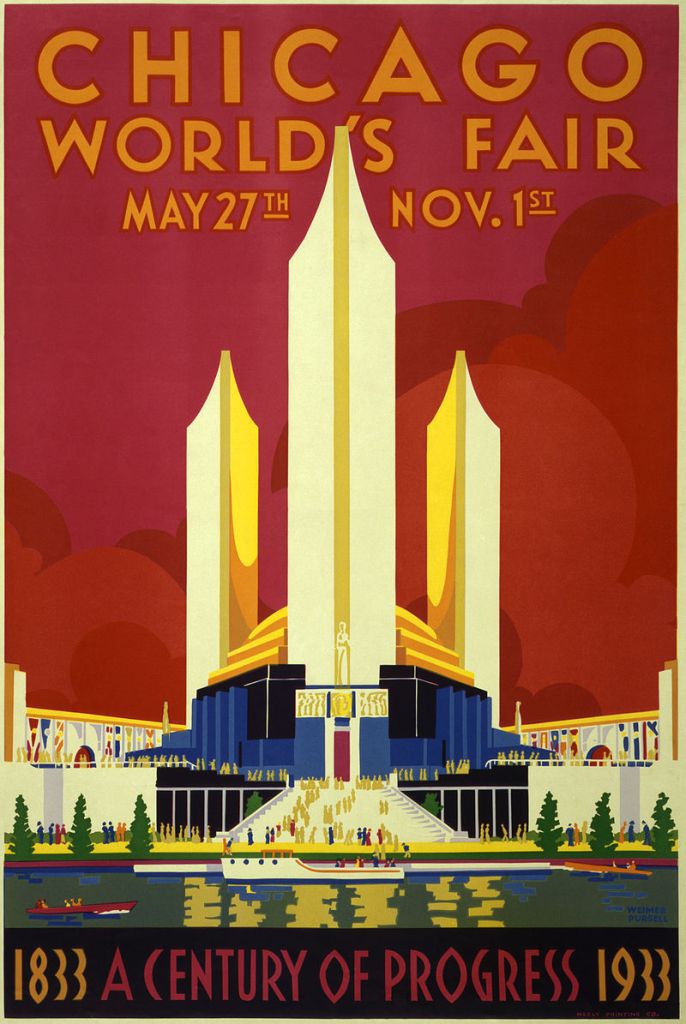
TV in 1934? A Trip to the Chicago World’s Fair.

By Weimer Pursell, silkscreen print by Neely Printing Co., Chicago – This image is available from the United States Library of Congress

From Daddy’s notes on the 1933-1934 Chicago World’s Fair:

What is Television? Who are you trying to kid? Projecting a picture and sound through the atmosphere? No, we believe this to be some kind of joke!  Well, let’s go in and see about this thing called television.

Five young Owingsville men, after hearing all the glowing remarks about the Chicago World’s Fair(also known as “A Century of Progress”), decided to journey to this big city. The young men were, Richart Brother, Bronson Snedegar, Burl Kincaid Jr., John H. Elliott, and Theodore Crouch. Theodore was older than the others and owned an automobile, so the other four supplied the gas and oil. Off and away they went to a week of fun and education. 

    
This was in 1934 which was in the heart of the so called “Great Depression.”  For those of you who do not remember that era, there was little money in the United States. Many families found themselves with every member unemployed. If you did not live during those years, there is no way that you can imagine what some fellas lived through.  

Upon entering the building which was built for the display of this new media called “television,” we were surprised at the shape of the auditorium or theatre (we did not know what to call it). The building was narrowly rectangular with a telecasting booth in one end and a large TV screen in the other. The large center section had seating much like movie theatres. Since it has been some 60 years since being privileged to witness a great electronic device being publicly born, the writer does not have much idea as to the number of seats. 


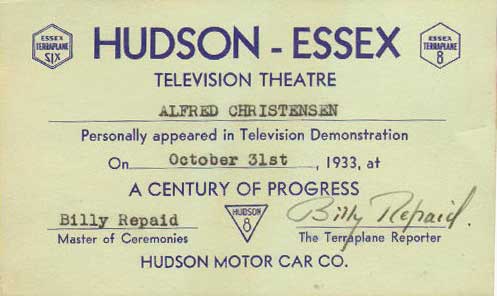
The young men were seated together and were anxious for the program to start. The announcer made some glowing remarks about the fair in general and TV in particular. A program was presented (do not remember much about it) but the presenters were concerned that the audience might think the whole thing could be a fake. To dispel any thought of the presentation on the screen being a fake, a person surveyed the audience and asked certain persons to go to the telecast booth. It seemed that he chose one person from each group. The writer was chosen from our group and got to be on television!

Daddy spoke of this trip often. He and others were only eighteen years old. He brought back the official book from the fair and we still have it.

His favorite area was the Little Town. It was an exhibit of everything small, with an entire home and its furnishings built on a small scale, but still big enough to enter and walk around.  ~ Don Kincaid

A participation card from the television exhibit at the Chicago World’s Fair. Image courtesy of https://www.earlytelevision.org/chicago_1933_worlds_fair.html

For more information about the Chicago World’s Fair of 1933-1934, you can visit the following links:

https://en.wikipedia.org/wiki/Century_of_Progress

https://www.earlytelevision.org/chicago_1933_worlds_fair.html

Minihan Saddles

From Daddy’s notes:

Bath County at one time produced some of the finest saddles obtainable.  The saddles were custom made to fit the individual. There are today some of those saddles still around.  Doris Darnell Kincaid owns one of those prized saddles as do some other Bath Countians.


Eugene Minihan founded and operated the saddlery business in O’ville.  He surround himself with several skilled employees and produced the renowned Minihan saddles. His shop was located where Dr. D.C. Cameron now has his office on the west side of Jefferson St. 


Mr. Minihan only made saddles for the individual, in other words, tailor made. The finest leather was used and the workmanship was excellent.  Great pride was taken in the comfort and fit built into the saddles.  

The author has one of the small anvils used by Mr. Minihan in the making of his fine saddles.

After 50 years of the Minihan saddle hanging in a hot garage, my mom sold the saddle to a collector in Cynthiana.  He cleaned and repaired the saddle and it is on display in his workshop. 


From the internet about Minihan:

“Eugene Minihan is credited with originating the “Kentucky Springseat” saddle. Mr. Minihan made these saddles in his shop in Owingsville, KY from the late 1880s to the time of his death in 1926. Many knowledgeable horsemen consider them the finest riding saddle ever. Minihan took a standard Somerset Broad Cantle saddle tree and removed the center of the tree bars, then spliced in pieces of stiff leather to make a sort of “hinge”. This was the first, and most successful, flexible tree design. It is very labor intensive to construct, and new saddle trees of this type are not commercially available. Original Minihans are highly prized, and several skilled saddle makers rebuild them on the original trees.”

Don


DARNELL FAMILY COLORIZED PHOTOS

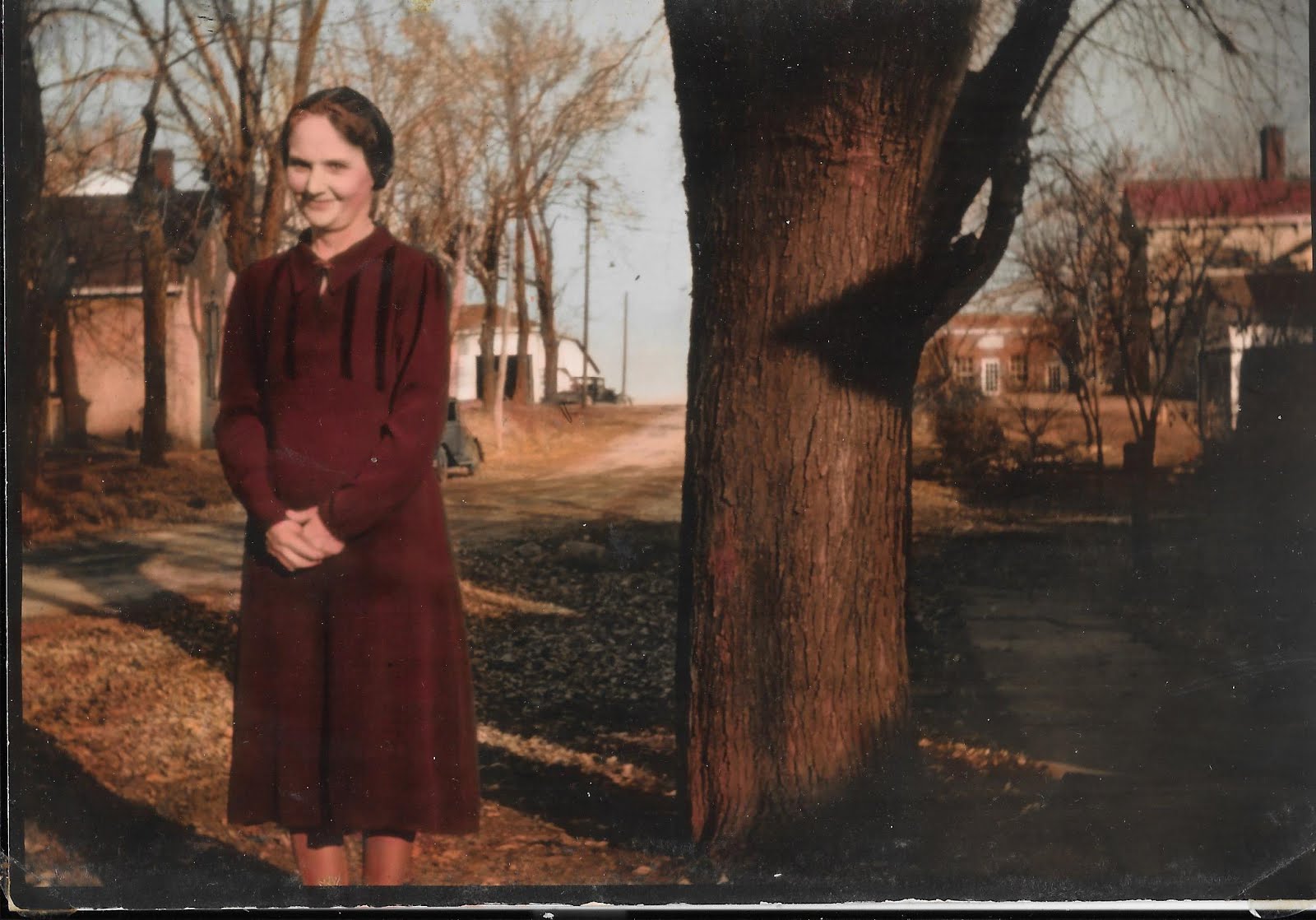
This photo of my grandmother Sallie Darnell was taken in about 1940 in front of their home on Coyle St. in Owingsville.  Mr. Jeff must have been at work at the bank.  In the background you can see three buildings still in use on Slate Ave. in Owingsville.

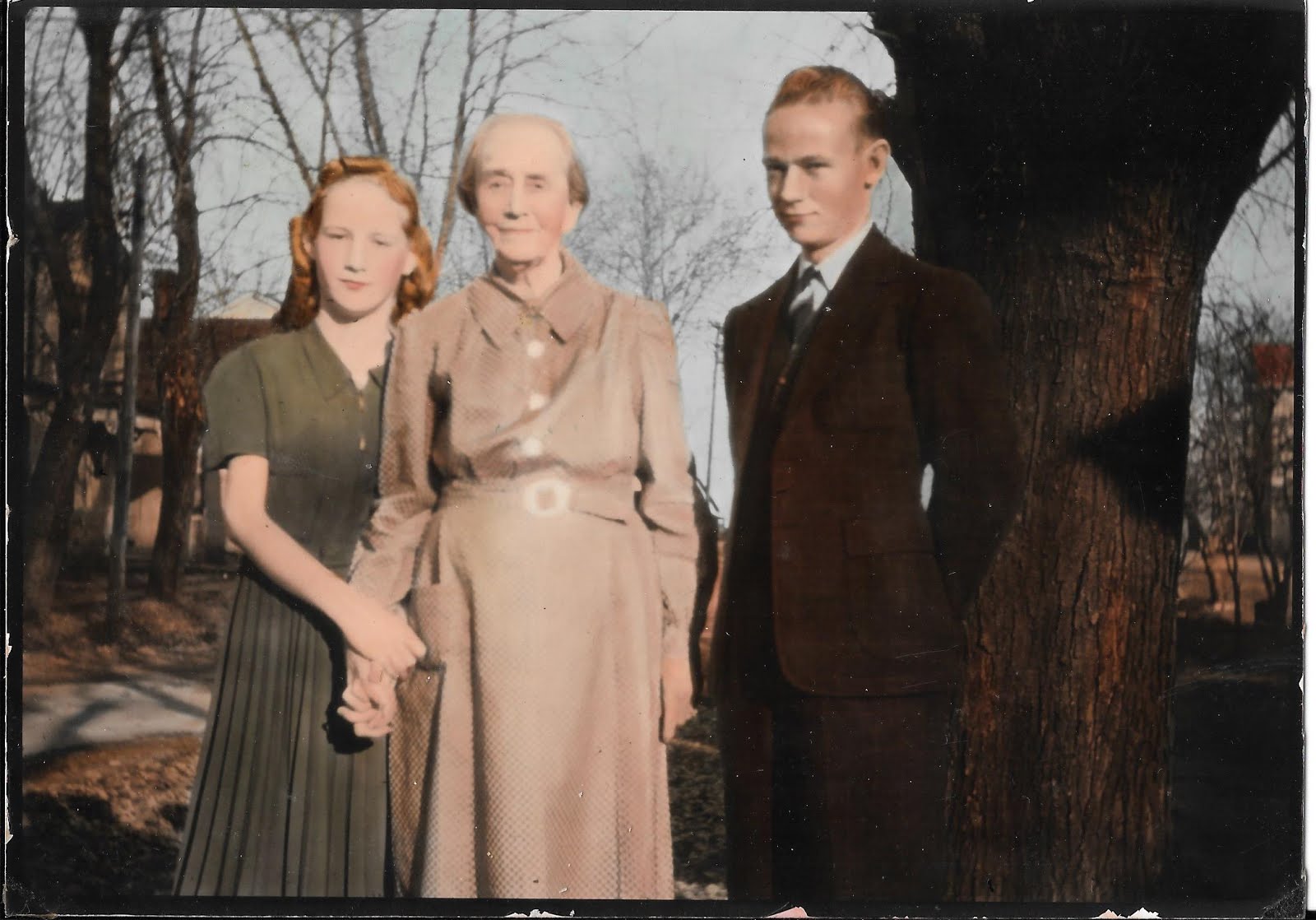
Apparently the photo was a specialty picture of some kind.  I’ve been told it started as a black and white, was colored in and then photographed again.

This picture was apparently taken the same day.  On the left is my mother, Doris Louise Darnell. Just guessing I think she was about 15. I think in the middle is my great grandmother Mrs. Rose A. Darnell, wife of Isaac R. Darnell.  She died in 1941. On the right is Donovan L. Darnell, my uncle. When I was a kid he jokingly called me Jack.  I’m proud to be named for him. ~ Don

More odd Phrases…….

Here’s another list of odd phrases that he collected and found lots of humor in. ~ Don, 1/24/2016
A sign seen in an Owingsville service station”NOT RELIABLE FOR ACCIDENTS!”
– – – – – – – – – – – – – – – – –
Git a hankerin’
As bitter as gall
Pretty as a picture
Hotter than a $2 pistol
Hotter than a firecracker
Bigger than a bear
Meaner than a snake
What’s cookin’?
Hackin’ it
Gone fishin’
Wed backer bed
Young whipper snapper
Punkin’ stud
Middlin’ to skuddlin’
Sharper than a tack

Odd Words and Phrases

The use of proper grammar and correct enunciation were important to Daddy.  His mother, Jane Kincaid, taught for many years, and he taught and worked in the board office for 42 years.  Here is a list of words he wrote down that were local regionalisms. When coming into town one of his favorites was ” we have arroved!” ~ Don
That therin (that)
Hit (it)
His’n, her’n (his or her ownership)
Wed backer beds ( weed tobacco beds)
Hain’t (they ain’t)
Summers (somewhere)
That’s all they are to it.
Sumpin (something)
Agin (against) 
He listed a few sayings as well:
Nip and tuck (thought to be the same as neck to neck as in a race)
Colder than a mackerel (cold and dead)
Darker than pitch. (roof pitch is black)
Madder than a wet hen.
Meaner than a snake.
Hotter than a fire cracker.

Sleigh Riding


Mr. Burl’s old sled.
It’s a Flexible Flyer and about 90 years old.  


This week, Don writes about the sleigh riding stories his father used to tell.  We wanted to get this up while the snow is still either on or fresh in our memories, and I would have done it sooner, but I’ve misplaced a bit of writing that Mr. Burl himself wrote about it.  When I do find it, I’ll update this post, but for now we’ll share what we remember him telling us.  

We often heard sleigh riding stories about Daddy and his friends. Even though he and his first cousin,R.W.,* were both hurt badly sledding, they absolutely loved it! The hill to Sharpsburg was in front of their houses and when they were kids it was not paved.  It was not only gravel, but also very crooked, and it wasn’t until the 80’s that the whiplash curve at the bottom was straightened and a new bridge was built over Prickley Ash stream. 

Because of the curve at the bottom, the boys would bail out before they got to it if possible. Many were injured because of the bail out and the barbed wire along the road. Daddy’s injuries caused him to miss six weeks of school. In his words, he “peeled the hide” off his shin all the way down to the ankle. A local doctor made a daily house call to check on him and to put Mercurochrome on it and change the bandages.

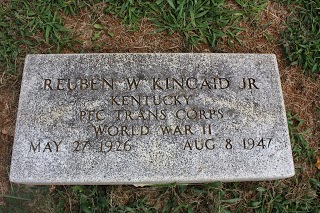
R.W. had a bad sleigh wreck as well.  He was badly injured and would eventually need surgery – surgery which he did not survive. His brother Dr. Owings Kincaid was there with him when he died at St. Joseph Infirmary in Louisville.

Daddy also loved telling about tying the sleds to some old car and being pulled around town. He always bragged that his sled was the only one to survive all the crashes. Our guess on its age is about 90 years old.  It was new about 1926 when Daddy was ten or so.  We still have the sled and it still goes fast! ~Don

A young R.W. with his father Reuben.
R.W.’s grave marker at the Owingsville Cemetery.
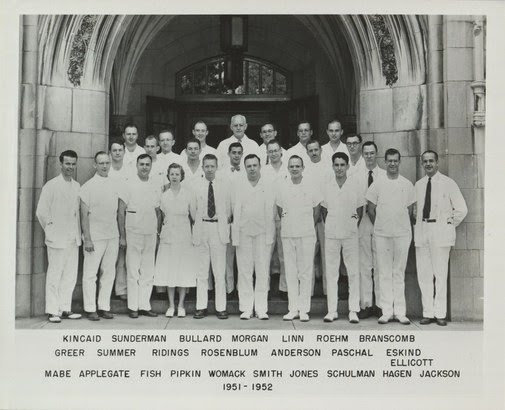
Owings Kincaid (back row on the far left) when he was a resident at Vanderbilt.  He would go on to have a very successful career at the Mayo Clinic.
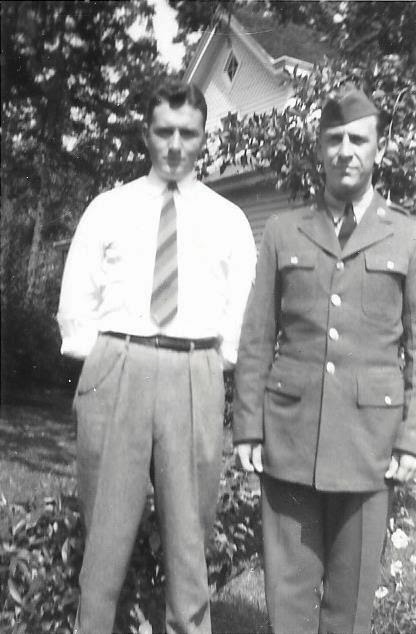
Owings and Burl Kincaid, first cousins and life-long friends.  Both men (and R.W.) served in WWII.


Here is a link to Owings Kincaid’s obituary.  Somewhere we have correspondence between Mr. Burl and Owings (who remained close throughout their lives), and when we get to that we’ll share any items that might be of interest.